
Inside Iran Air's Secret Playbook: How My Journey Into Tehran Reveals How a Sanctioned Airline Keeps Flying


Executive Briefing: Why This Matters to Modern Aviation
For airline managers, pilots, and industry executives, Iran Air is not just a historical anomaly; it is a masterclass in extreme fleet lifecycle management, supply chain subversion, and gray-market economics. This report pulls back the curtain on how an airline operates entirely outside the regulatory frameworks the Western world relies on to ensure commercial air safety.
It took nearly a year of bureaucratic silence before I got the call. Then in February 1997, while on assignment in Dubai, my phone rang after midnight. The Embassy of the Islamic Republic of Iran to the United Nations — my only route in, given the absence of U.S.-Iranian diplomatic relations — had made a decision.
“Your visa is approved,” the attaché said dryly. “Go to our embassy in Dubai tomorrow and have them issue it.”
Three days later, I looked down at the shimmering blue waters of the Gulf as my flight began its descent into Tehran.
Airport 1975
The tarmac at Tehran’s Mehrabad International Airport looked nothing like a modern hub.
To the untrained eye, the rows of grounded Boeing 747s, 727s, legacy 737-200s, and Airbus A300s looked like a graveyard, their engines shielded under bright orange covers. But to the line mechanics and executives of Iran Air, that tarmac was a vital ecosystem.
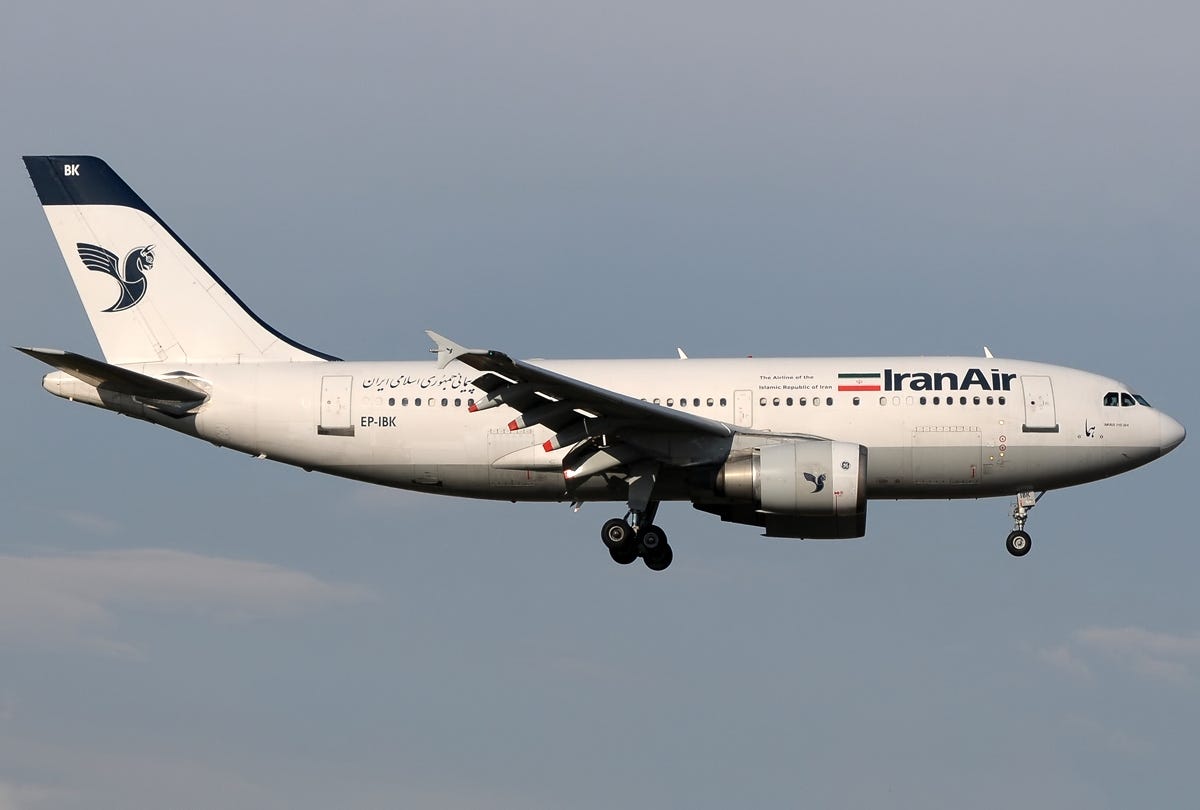
When asked point-blank how Iran Air continued to fly sophisticated Western aircraft every day, the airline’s leadership didn’t flinch. Their answer wasn’t found in a glossy corporate brochure, but in a philosophy born of sheer necessity.
“We wake up every morning worrying about which component that is vital for passenger safety will fail, and how we will be able to replace it,”
Iran Air chairman Dr. Hassan Shafti told me, leaning across his desk. “Other airlines have plans for how they can thrive. Our goal is just to survive.”
And Then Came 1979...
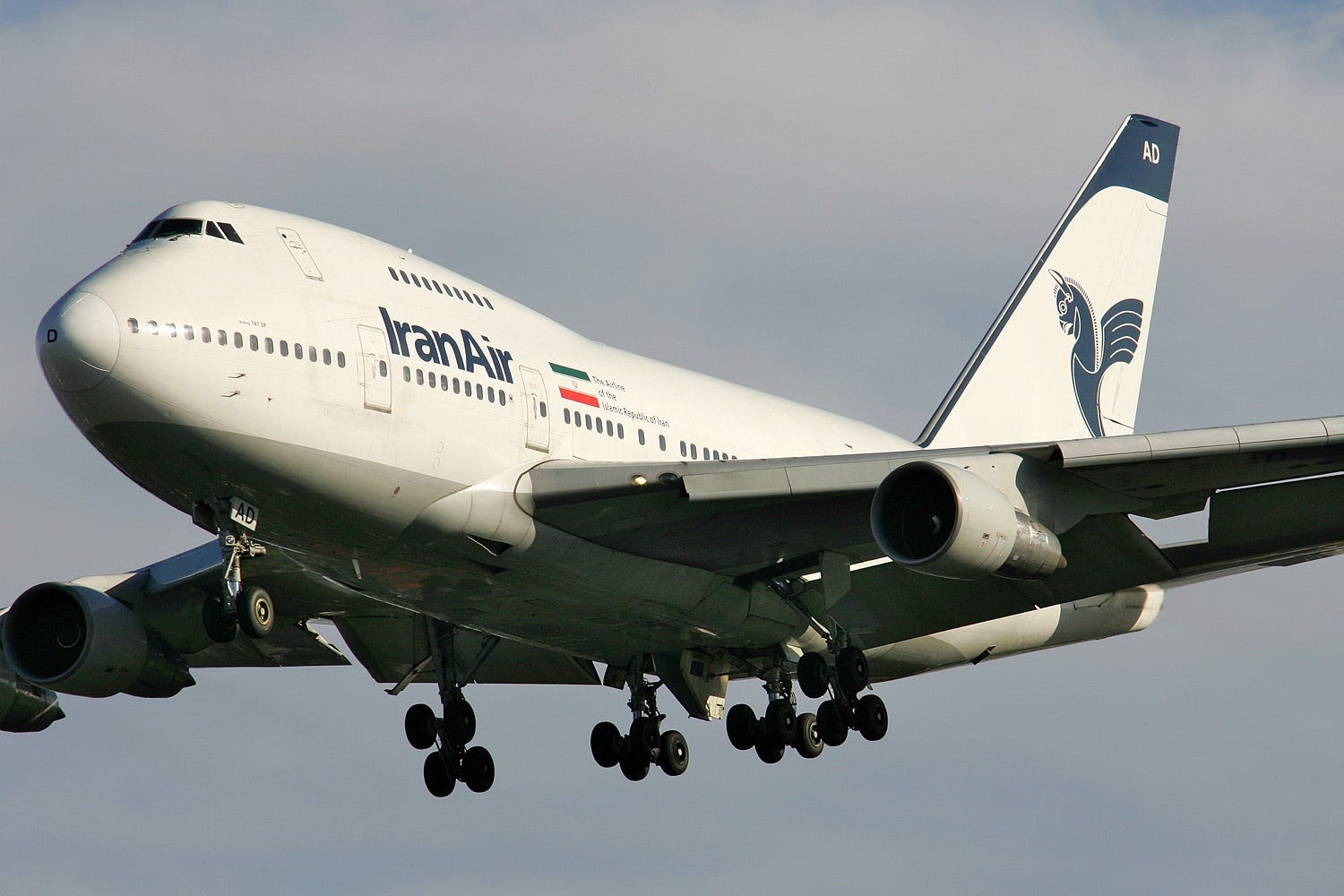
It hadn’t always been a story of desperate survival. Starting in the 1960s, Iran Air had earned a reputation as one of the premier airlines in the world. And one of Boeing’s best customers, buying 707s, 727s, 737s and 747s on a route network that extended from Japan to the east to the USA in the west.
The glamorous carrier had placed orders for the supersonic Concorde, operated what was then the longest nonstop flight in the world with its Boeing 747SP service between Tehran and New York, and boasted a route network stretching from JFK to Beijing, with plans to expand to Australia.
The embargo isolating Iran Air was born in November 1979, when radical students seized the U.S. Embassy in Tehran and President Carter signed Executive Order 12170, freezing Iranian assets. But for Iran Air, the specifically aviation-targeted consequences compounded over the following two decades.
The Export Administration Act, OFAC’s Iranian Transactions Regulations, and successive executive orders progressively tightened the noose: no new aircraft, no engines, no spare parts, and critically — no access to manufacturer maintenance documentation.
Boeing and Airbus were legally prohibited not just from selling airplanes, but from providing the technical manuals needed to keep existing ones airworthy. By the time of my visit, the fleet Iran Air was flying had been frozen in amber since before the Revolution.
The Masterminds of the Hangar
Shafti told me how Iran Air held what he called the highest standards for aircraft maintenance in the world, hosting as many as 1,400 expats to train the Iranian employees in state-of-the-art aircraft and powerplant care. Only OEM equipment was used, he explained and all heavy checks were carried out abroad.
After the US sanctions were imposed, all that went away, leaving a well-trained domestic workforce to carry on.
Behind the survival of the fleet was a cadre of what industry insiders called airline “masterminds.” These were engineers and maintenance chiefs who had turned the rigid discipline of aviation engineering inside out.
Because buying an original component through official channels was illegal, the airline was forced to play by black-market rules. “Pratt & Whitney charges $15,000 for this Compressor Spacer to any other airline in the world,” a senior engineer told me, gesturing to an engine component on a bench in the sprawling, cavernous maintenance hangar. “It costs us $60,000.”
When I asked why, he laid out the mechanics of the deception. Without naming names, Dr. Shafti explained that they had established a labyrinth of shell companies across the globe. The very engine component his crew was about to install had been bought from an Original Equipment Manufacturer (OEM) supplier in Malaysia, transferred to an intermediary front firm in Tajikistan, shipped to a broker in Turkey, then to another in Dubai, and finally flown to Tehran on Iran Air’s regular scheduled flight. Every middleman and shadow broker along the route took a hefty cut.
When I pointed to the global problem of counterfeit parts that has caused accidents in some parts of the world, Shafti became visibly angry. “The US knows we are operating American-built aircraft and engines,” he argued.
“So, for them to refuse to sell us the parts to operate that equipment is not a threat to Iran’s economy; it’s a threat to air safety. ICAO and IATA both directed the US government to provide spare parts, but it never responded.”
It was a claim I found difficult to verify through official channels — neither ICAO nor IATA responded to requests for comment — but Shafti made it without hesitation and with the quiet confidence of someone who had made it many times before to audiences who already knew it to be true.
We walked to a separate workshop in an adjacent building, where the operation shifted from smuggling to replication. Iran has invested heavily in training young people in aircraft engineering. The company built a modern training center where it trains engineering graduates from the country’s top schools from ab initio recruits to those whom he claims are as good at repairing and replicating parts as any of their peers in Seattle or Toulouse. “We offer 170 different courses and have completed 3.3 million hours of training in the last three years,” Shafti told me.
On the day I visited, a team of technicians was manufacturing replacement parts using original Airbus components as physical templates. Though I am an aviation journalist and not a certified engineer, the precision was staggering; when the technician proudly held the original part and the domestic duplicate side-by-side, I could not tell the difference.
“This costs us almost nothing compared to having to buy them through clandestine networks,” he said with a quiet pride, pointing out that 100% of aircraft and engine maintenance, right through D-checks, are now performed in-house at the Tehran base.
Yet, money and replication alone could not sustain a major airline. The core of their survival strategy relied on a relentless process of component recycling. The grounded jets on the tarmac weren’t trash; they were vital donor organs. If an active Boeing 747—including one legendary 1976-built model that was older than most of the young mechanics working on it—needed a hydraulic valve or an avionics module, engineers would meticulously harvest it from a parked counterpart.
2026 Update:
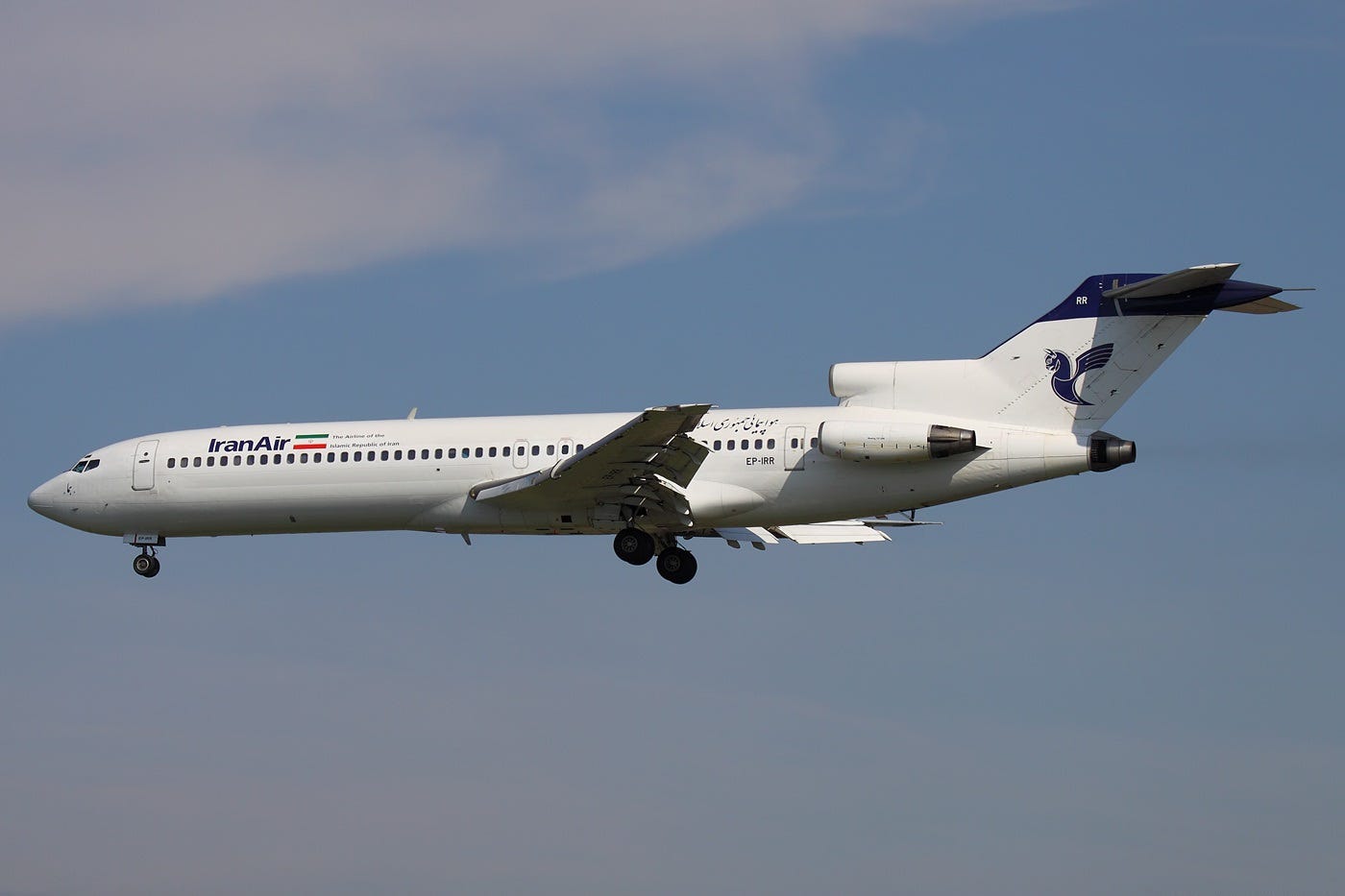
The self-reliance strategy I observed has apparently continued to compound. By late 2024, Iranian aviation authorities were claiming full domestic capability to manufacture structural components for Boeing and Airbus engines — a significant escalation from the parts replication I witnessed in the maintenance hangar. In December 2025, state media reported that three long-grounded aircraft — an Airbus A310, a Fokker F100, and a Boeing 747 freighter — had been returned to service through domestic restoration. Whether those claims are verifiable, and whether the aircraft meet anything approaching international airworthiness standards, remains an open question.
Turning Compliance into a Paperwork Problem
But domestic ingenuity could only bridge half the chasm. The rest of the operation relied on a global procurement apparatus that specialized in turning Western sanctions compliance into a mere paperwork problem.
The primary weapon in this bureaucratic warfare was the forged end-user certificate. Because aviation parts are high-value, compact, and easy to repackage, brokers could easily falsify documents. An export certificate might list a legitimate, compliance-friendly company in Turkey, Cyprus, or the UAE as the final destination. Once the paperwork cleared and the Western exporter approved the sale, the chain of trust was broken. The parts were quietly diverted to Tehran.
When I questioned the safety and ethics of utilizing these shadowy, uncertified supply chains, Chairman Hassan Shafti threw up his arms in frustration.
“Look, we are not the military. We are not in the weapons business; we’re not killing people,” Shafti insisted. “
My job is to run an airline; to fly people safely from A to B. We—all of us, everybody you have met today—are commercial airline people, not the Iranian military.
And yet I know my phone calls are tapped, my emails are read by Western intelligence services. So if we have to go under the radar to keep our airline safe and flying, I will do that.”
The Fine Line of Survival
Operating this way required walking a razor-thin tightrope. While Iran Air’s executives framed their mission as a civilian effort to preserve passenger safety in the face of economic warfare, Western intelligence agencies viewed the aviation sector through a far more skeptical lens.
The airline’s clandestine reach routinely collided with geopolitical realities. The United States and its allies repeatedly targeted front companies tied to the network, pointing out that the very same supply lines keeping civilian airliners aloft were deeply intertwined with state apparatuses like the Islamic Revolutionary Guard Corps (IRGC).
According to reports by the compliance research firm Kharon, even when direct flights to Europe were cut off by sweeping sanctions, Iran Air’s commercial footprint persisted through a complex web of general sales agents (GSAs) and international import-export firms like Adineh Travel, which seamlessly blended civilian transport with the broader strategic trade of goods.
For the pilots, mechanics, and executives, this geopolitical friction was the background noise to a grueling daily reality. They had not “beaten” the sanctions; they had merely insulated themselves from them at an exorbitant cost. The result was an aging fleet kept airworthy by a hybrid system of domestic engineering, component recycling, and high-risk international procurement.
As the interviews ended, a vintage Rolls-Royce Tay 650-15 turbofan turned over somewhere across the tarmac — which, given everything I’d just been told about how its components got there, was either reassuring or deeply unsettling, depending on your perspective.
Iran Air has not beaten the sanctions. Its executives would be the first to tell you that. What it has done is construct — at enormous cost, through considerable legal risk, and with genuine engineering ingenuity — a parallel aviation ecosystem that operates entirely outside the regulatory frameworks the Western world relies on to ensure commercial air safety. The question that should concern the industry is not whether this system works. Clearly, it does, after a fashion. The question is what it costs in safety margins that no outside auditor will ever be permitted to measure.
Personal Postscript
People often asked if I was worried about my personal safety during my assignment to Iran. I can honestly say that from the moment I presented my passport at Tehran Airport, I never felt the slightest threat. Everyone from the taxi drivers to the top executives at Iran Air treated me with immense hospitality, respecting the fact that I was there as a professional asking tough, necessary questions.
Looking back from today’s deeply fractured geopolitical climate, that window of access feels like a relic of a different era. The real trouble, ironically, happened afterwards.
For the next two years, the assignment followed me home. Every single time I landed back in the United States, passport control computers flagged my travel history. Without fail, I would be pulled into a back room by customs agents to be interrogated about exactly why an American aviation journalist had been granted access to the inner sanctum of Iran Air. They knew what I had just learned: that the underground network keeping those jets in the air was a masterclass in defying the Western world.
A note to readers who may question the purpose of this story: aviation journalism has never been confined to friendly skies. I have reported from airlines operating under authoritarian governments, in conflict zones, and under the scrutiny of intelligence agencies on multiple continents. Reporting on how Iran Air functions is no more an endorsement of the Islamic Republic than reporting on Aeroflot during the Cold War was an endorsement of the Soviet Union. What I documented in Tehran — the forged certificates, the shell companies, the cannibalized jets, the government-supported subterfuge — are facts the international aviation community needs to understand. I make no apology for reporting them, and I would do so again.
The Strategic Reality of Modern Aviation
What Iran Air proved is that when global supply chains are choked by geopolitics, compliance becomes a high-stakes operational risk.
This is the level of analytical depth we deliver every week at World Airline Strategy. We dissect the hard operational, financial, and geopolitical realities that directly impact your fleet, your routes, and your bottom line.
By upgrading to a paid subscription for $10/month or $100/year, you unlock:
Weekly Strategic Briefings: Deep dives into airline operational resilience and fleet restructuring.
Geopolitical Risk Intelligence: Sharp analysis on shifting global supply chains and airspace constraints.
Full Archive Access: Complete, unrestricted access to our library of deep-dive industry reports.
Excellent work, David.
As an airline pilot for Iran Air during the late sixties and seventies, flying the best and the newest technology available at time, I appreciate the contrast!
Captain Ross Aimer
UAL & Boeing ret.
CEO, Aero Consulting Experts