
Flying Circus: The Weirdest, Wackiest Airlines Ideas Ever

You’ll notice this newsletter has a new name. World Airline Strategy is now Stories from Seat 4A — same writer, same weekly aviation stories, just a title that’s honest about what this actually is: interesting stories and fascinating facts, not statistics and strategy memos.
Forty dogs began barking at exactly the same moment.
The flight attendants weren’t alarmed. They expected it.
After all, there wasn’t a single human passenger on board.
Welcome aboard Pet Airways.
People have spent a century trying to reinvent flying in wonderfully crazy ways.
Every one of these companies began because someone said:
“I’ve got an idea.”
Some succeeded.
Most failed spectacularly.
Here are six of my favorites.
Before we get to the barking dogs, let’s start in the 1970s.
The Flying Beach Party
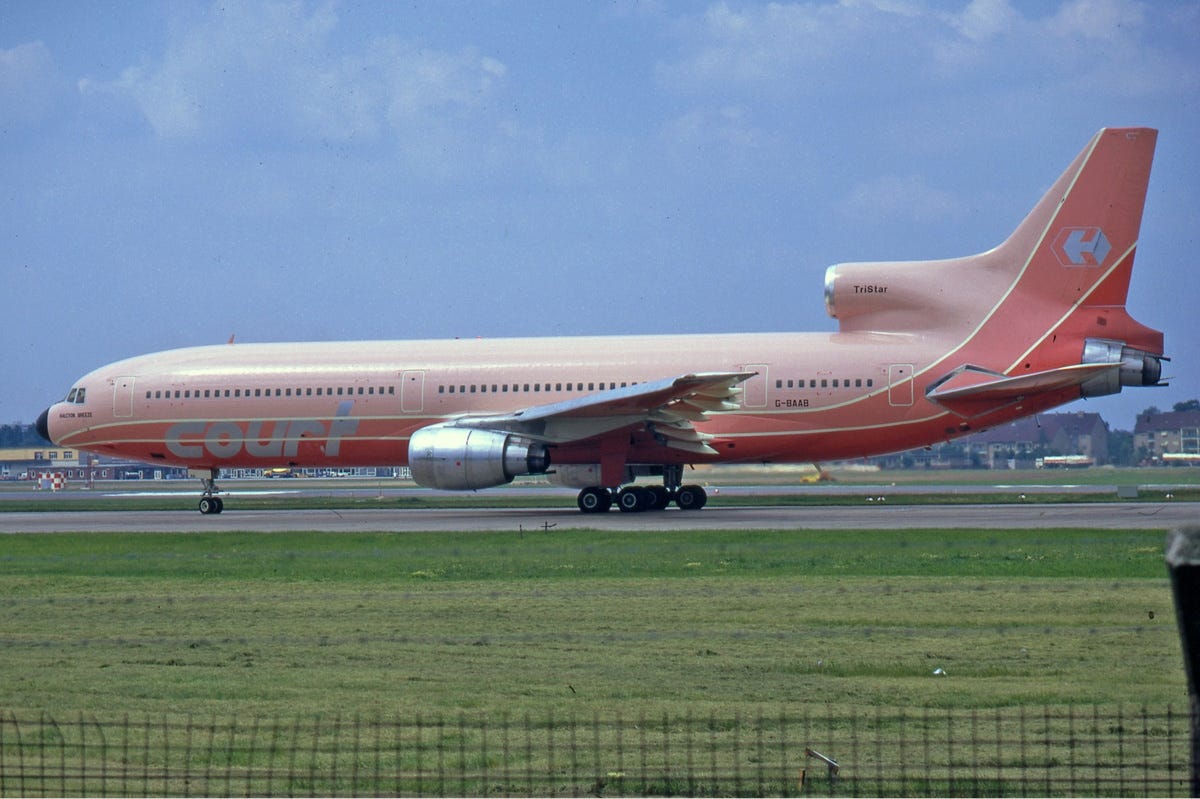
In the early 1970s, British charter carrier Court Line decided flying had become far too serious.
Its fleet wore eye-searing shades of pink, lilac, turquoise, and yellow. Fashion icon Mary Quant—the woman widely credited with popularizing the miniskirt—designed the cabin crew uniforms to match the aircraft. Boarding one of their jets felt less like entering an airliner and more like arriving at a 1970s beach party.
Then came one of the strangest catering ideas ever attempted.
Instead of pushing meal carts down the aisle, Court Line placed two meals in every seatback—one for the outbound flight and another, chilled with dry ice, for the return journey.
There was just one small problem.
Passengers quickly discovered they could pick the locks.
I still remember flying back from Palma to Luton and watching furious travelers discover that the passengers on the earlier flight had helped themselves to tomorrow’s sandwiches.
Brilliant idea.
Disastrous execution.
Their Passengers Had Paws: The Rise and Fall of Pet Airways
Why force Fido into a cold, dark cargo hold? In 2009, husband-and-wife duo Dan Wiesel and Alyse Tognotti decided pet parents deserved a better option. The idea was born out of sheer desperation when trying to figure out how to transport their own Jack Russell Terrier, Zoe, from California to the East Coast. Unwilling to risk her safety in a commercial airliner’s luggage hold, they realized millions of pet owners shared the exact same anxiety—and Pet Airways was born.
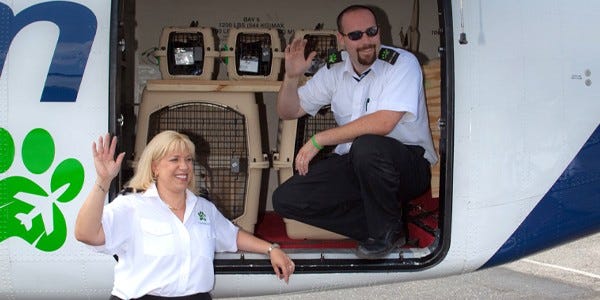
The idea sounds like something from a Hollywood comedy, but it was absolutely real. Dogs and cats flew in main-cabin pet carriers while their owners flew separately on commercial flights. Every fifteen minutes, specially trained “Pet Attendants” checked on their furry passengers, offering water, treats, and reassurance. Before departure, the animals enjoyed a final potty break in private airport lounges. Their owners could even track whether Rover had eaten his lunch or taken a nap somewhere over Kansas.
The “Pawsengers”—yes, that’s what the airline called them—were mostly dogs and cats, though Pet Airways occasionally accommodated pot-belly pigs and the odd chatty parrot, all of which flew in dedicated comfort.
The onboard experience was tailor-made to calm nervous human parents. No word on whether Fluffy could earn frequent flyer miles or if miniature pigs scored upgrades.
Naturally, carrying dozens of dogs in a single cabin made for a lively flight—attendants noted that taxiing and landing often triggered a synchronized chorus of 40 barking passengers. But for nearly two years, the service was a roaring success among pet lovers, safely transporting over 9,000 animals across major US hubs like New York, Los Angeles, Chicago, and Atlanta.
So, what grounded the pet airline?
Despite high demand and tickets ranging anywhere from $150 to $1,200, Pet Airways ran into a crushing financial reality: scalability and massive operating costs.
Because Pet Airways did not own a full commercial airline license, they had to charter aircraft and flight crews from third-party operators. When fuel prices surged and partner charter companies raised their rates, Pet Airways’ profit margins evaporated. The airline was forced to spend far more on aircraft leasing, fuel, and specialized staff than it could make back from carrying 40 to 50 animals per flight.
By late 2011, flight cancellations mounted as financial troubles worsened. The company officially ceased operations in 2013, leaving a legacy as one of the most beloved—yet economically fragile—experiments in modern aviation.
That said, the airline announced in May 2024 that it planned to seek new capital and restart operations.
But that’s the airline business in a nutshell.
