
The $7.90 Problem: Inside the Great Premium Convergence
America's airlines are spending billions to own the premium market. Not all of them can win — and some of them know it.

Executive Summary
Product Convergence: The traditional boundary between Low-Cost Carriers (LCCs) and Legacies is evaporating as Southwest, JetBlue, and Frontier pivot toward premium hardware to protect razor-thin margins.
The Value Equilibrium: As premium products become commoditized across all carriers, legacy airlines risk losing “brand prestige” to cheaper competitors who can offer the same seat with better operational reliability.
Operational Friction: The move toward “tiered” business class products (like United’s Polaris Base) creates a new labor burden, forcing crew members to act as “product police” within the same cabin—a move that may dilute the overall passenger experience.
In the world of airline economics, there is a number that haunts every boardroom: $7.90.
According to IATA’s 2026 projections, that is the average net profit the global industry earns per passenger. After managing billions in capital and navigating complex global labor contracts, the industry makes less on a traveler than Apple makes on a plastic iPhone case.
IATA projects global passenger traffic to grow nearly five percent in 2026, with premium cabin demand continuing to outpace the recovery in economy — driven increasingly by leisure travelers, not just corporate accounts. Premium economy, once a minor cabin on perhaps a handful of widebody aircraft, is now installed on approximately 45 percent of widebody jets worldwide.
This is why the “premium” seat isn’t just a luxury in 2026—it’s a life raft.
This reality has sparked a gold rush, but as 2026 unfolds, we are seeing something unprecedented. The bottom of the American market is starting to look like the top, and in the rush to own the high-yield traveler, the industry may be accidentally destroying the very “exclusivity” it is trying to sell.
The Convergence: When Everyone is Special, No One Is
We used to understand the tiers of American aviation: legacies for perks, LCCs for price. Today, that boundary is evaporating. When Southwest introduces assigned seating and Frontier—the most “ultra” of ULCCs—adds First Class , the industry isn’t just evolving; it’s panicking. This is the Value Equilibrium. If a corporate traveler can get a lounge and a comfortable seat on Southwest for half the price of a legacy carrier, the “brand prestige” of the Big Three evaporates.
But the logic was purely defensive. They are chasing the same “premium-leisure” traveler that United and Delta have spent billions courting.
But here is the catch: when every carrier from Frontier to Delta offers a “premium” experience, the product becomes commoditized. If a corporate traveler flying from Houston to Denver can get a comfortable, on-time Southwest seat and lounge access for half the price of a United “Polaris” suite, the prestige of the legacy brand evaporates. For the manager overseeing a corporate travel budget, the choice isn’t about the thread count of the blanket; it’s about the “Value Equilibrium.”
United’s Mathematical Defiance
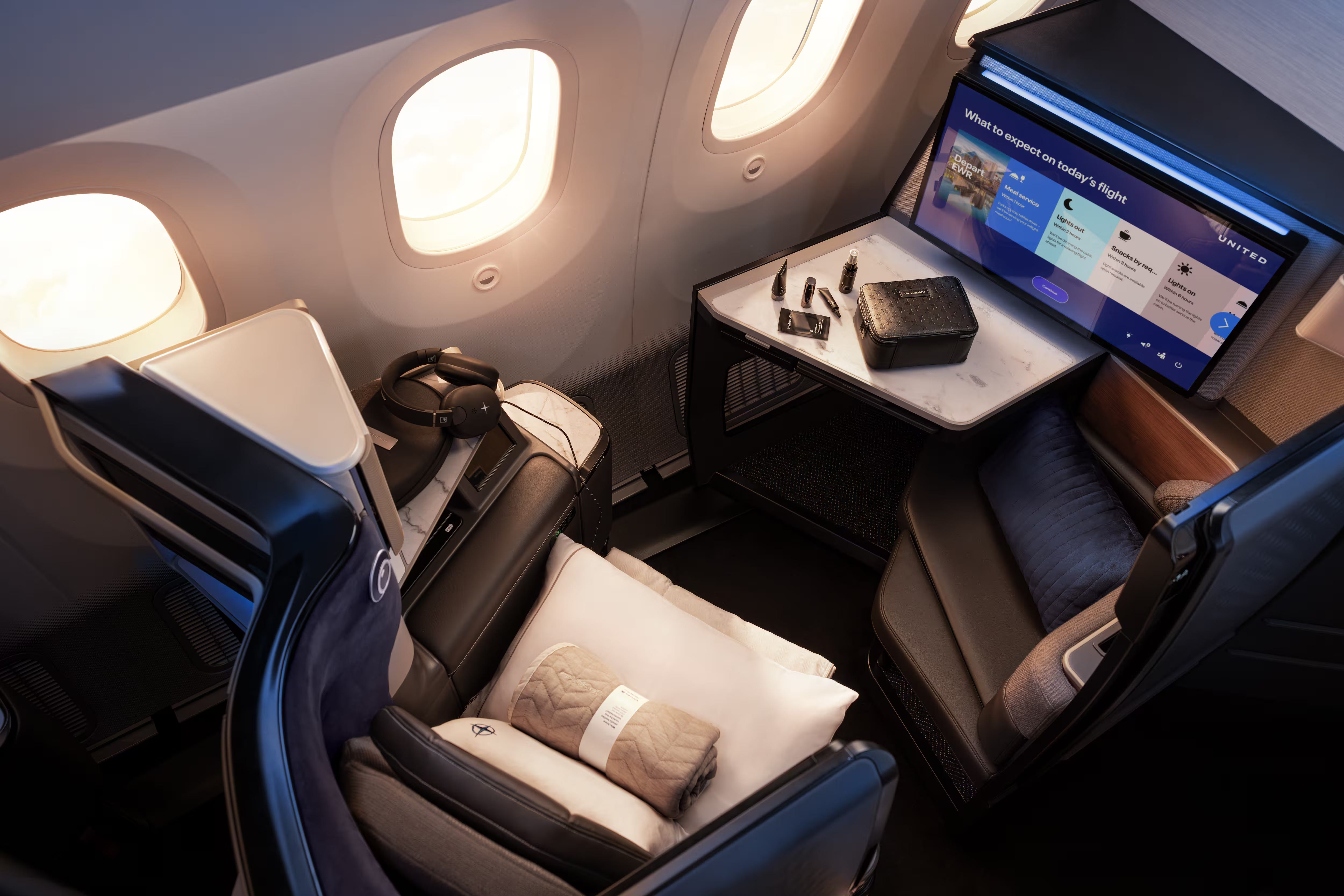
Of the Big Three U.S. carriers, United Airlines has moved with the most visible ambition. Their new Boeing 787-9 “Elevated Interior”—the 78L subfleet—is a marvel of density. Instead of the typical 267 seats, this version carries only 222, with nearly 45% of the aircraft dedicated to premium pricing.
To make the math work on such a premium-heavy bird, United has introduced the Polaris Studio—a $499 surcharge for a bit more real estate—while simultaneously launching a Polaris “Base” fare. This “Base” fare is perhaps the most honest look at where we are headed: it is essentially Basic Economy migrated to the front of the plane. You get the lie-flat bed, but you lose the lounge, the second bag, and the ability to change or refund your ticket.
It is a calculated bet that certain customers will pay for the sleep, but not for the ceremony. By stripping away the perks, United is essentially “fencing“ its premium product—calibrating the Base fare to extract revenue from the budget-conscious traveler while pushing higher-margin corporate accounts toward the more profitable Standard and Flexible tiers.
United CEO Scott Kirby telegraphed the strategic logic in a July 2025 earnings call, stating that only a small number of U.S. airlines can sustainably operate as full-service carriers focused on premium travel. Polaris Studio, the 78L subfleet, and the tiered fare structure are three components of the same argument: United intends to be one of those airlines, and it is investing accordingly.
The Operational Friction
However, this creates a new kind of operational friction. It asks flight attendants and gate agents to act as “product police“ within the same cabin. Managing a hierarchy of service where some passengers paid a thousand dollars more than the person in the identical seat next to them could easily sour the very experience passengers are paying a premium for.
Subscribe Now to Unlock the Full Strategy Briefing Every Week
American’s Long-Overdue Modernization
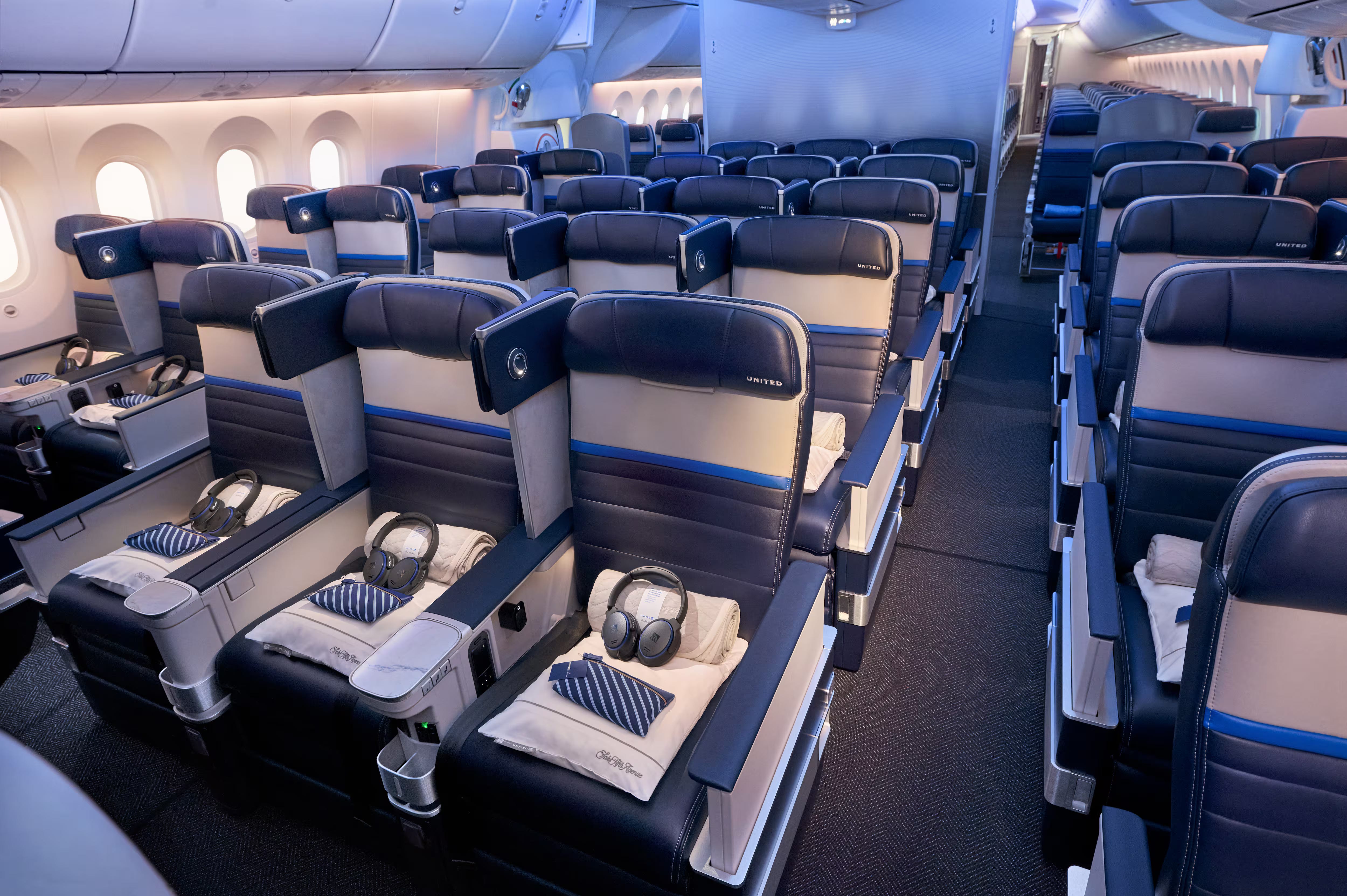
American Airlines arrives at this party later than it would have liked. For years, the carrier’s long-haul business class product lagged both Delta and United, a source of ongoing frustration for frequent fliers and a vulnerability that its competitors exploited freely. The new Flagship Suite, now deploying on the airline’s Boeing 787-9 fleet and its new Airbus A321XLR, represents a genuine modernization: a lie-flat seat with direct aisle access, a privacy door, wireless charging, USB-C and AC power, and improved personal storage.
American has also introduced a “Flagship Suite Preferred“ product — its own version of United’s Polaris Studio concept, positioning enhanced front-row suites within the business class cabin. The notable difference, for now, is commercial: American is not yet charging a surcharge for Flagship Preferred seats. Industry analysts widely expect that to change once the fleet rollout matures and demand patterns are established. For the moment, it represents one of the better-value premium experiences in the U.S. market — though in the copycat world that is the US airline industry, that window is unlikely to remain open indefinitely.
American is also retrofitting its Boeing 777-300ER fleet with the new Flagship Suite product and has announced plans to bring the same seats to its 777-200ER fleet. The carrier’s centennial year — American turned 100 in 2026 — has been marked, fittingly, by the most significant cabin upgrade program in its recent history.
Delta Plays the Long Game
Delta Air Lines is, characteristically, not making the loudest noise in this conversation. The carrier’s strategy is less about unveiling dramatically new products and more about deploying its existing premium architecture at greater scale and with greater consistency. The airline has placed firm orders for 20 Airbus A350-1000 aircraft — with options for 20 more — that will serve as its new flagship, featuring redesigned quad and companion suites with enhanced storage, personalized ambient lighting, and Starlink connectivity. The first deliveries are scheduled for late 2026.
On the narrowbody side, Delta is expanding its A321neo fleet, which features higher premium seat density than earlier configurations, with more of the cabin dedicated to First Class and Comfort+ products. The carrier has also retrofitted a number of Boeing 757 aircraft with updated interiors. Skytrax named Delta One the best business class product in North America at its most recent World Airline Awards.
Delta’s approach reflects a brand strategy that has been consistent for nearly a decade: compete on perceived quality and service reliability rather than on hardware novelty. It is a defensible position, but one that requires continuous execution. In a market where United is deploying a 99-premium-seat 787-9 and American is finally modernizing its long-haul cabin, Delta’s edge will depend as much on the so-called “soft product,” its people delivering the service as on the seats and aircraft itself.
The JetBlue Paradox
JetBlue’s move into domestic first class is, by the airline’s own characterization, not aspirational. It has also made the very expensive move into airport lounges with its first BlueHouse already open at JFK and one in Boston slated to open later this year.
The carrier has described its decision to introduce what it calls the “Mini Mint“ — or, informally, the “Junior Mint” — as pragmatic rather than inspirational. That candor is refreshing, and the commercial logic behind it is straightforward.
JetBlue has posted losses of nearly $3 billion since 2020. Two major strategic initiatives — an alliance with American Airlines and a proposed acquisition of Spirit Airlines — were both blocked by federal courts. The airline needed new revenue, and premium seating is where the revenue is. Beginning in June 2026, JetBlue will install Collins Aerospace MiQ recliner seats on its Airbus A220, A320, and A321 aircraft that do not currently carry the Mint business class product. Each aircraft will receive between twelve and sixteen first class seats, depending on type, at 36 to 37 inches of pitch.
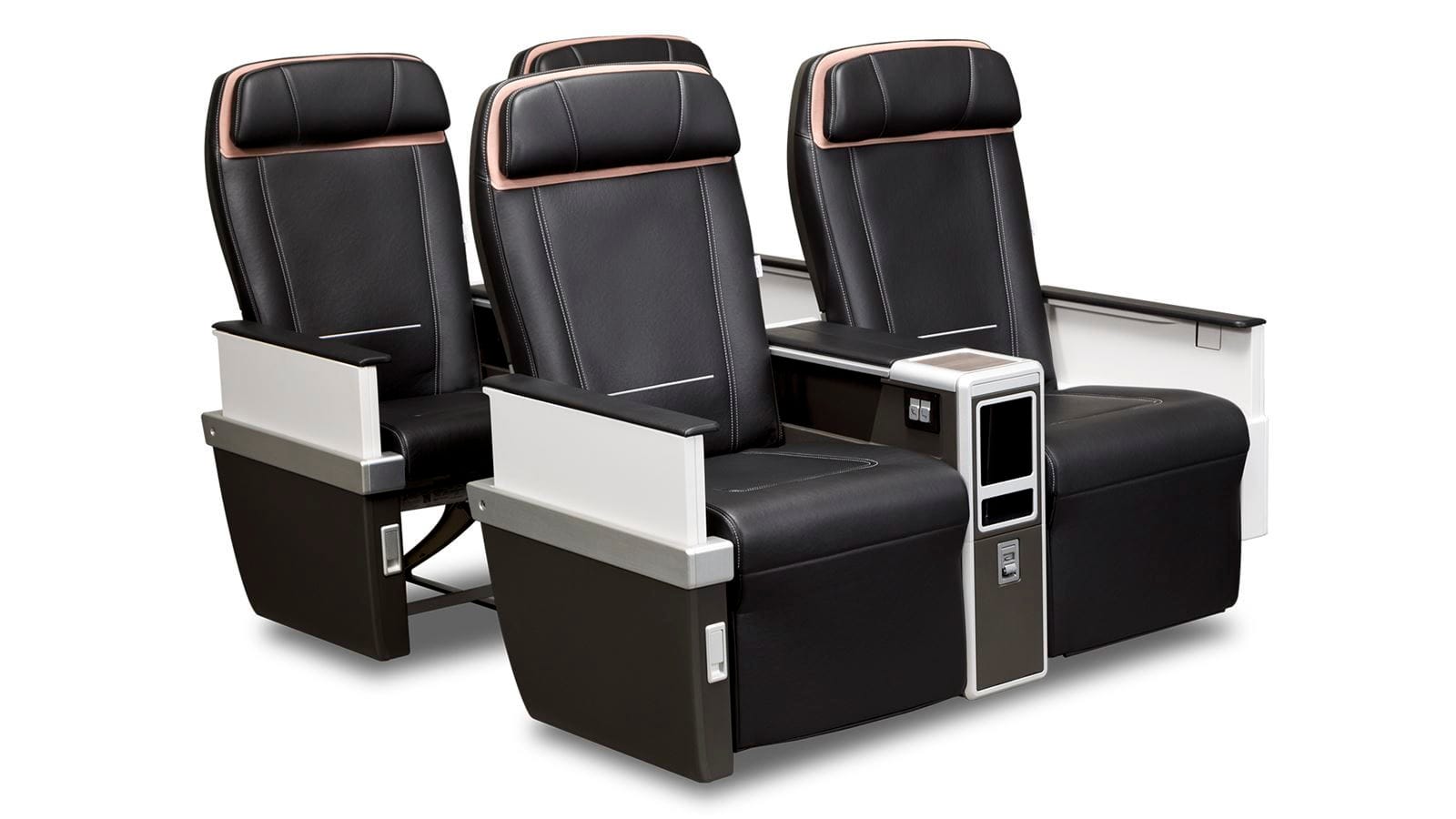
The economics of the cabin reconfiguration are worth noting. To accommodate the new seats, JetBlue is reducing its standard economy pitch from 32 inches — once a key differentiator for the carrier — to 30 inches. The airline that built much of its early brand identity around the most generous economy legroom in the domestic market is now bringing its coach product in line with industry standard, monetizing the space it once gave away. The retrofit will proceed at approximately 20 aircraft per month, with the target of having 25 percent of the non-Mint fleet equipped by the end of 2026.
The strategic question JetBlue faces is whether customers who once chose the airline specifically for its economy product will pay the premium for Mini Mint, or whether they will simply book elsewhere now that JetBlue’s economy seats no longer stand apart. The answer will take time to emerge in the revenue data.
The Ceiling of the Sky
The central question for 2026 is whether the market can actually support this much luxury. Premium travel demand is strong, but it isn’t an inexhaustible resource.
When every airline chases the same 10% of travelers on the same routes with nearly identical hardware, yield dilution is the inevitable result. A lounge is only a “perk” if it isn’t overcrowded; a priority boarding line is only “priority” if half the plane isn’t standing in it.
The carriers that survive this arms race won’t necessarily be the ones with the flashiest renderings. They will be the ones who remember that, for a business traveler on a two-hour flight, “premium” isn’t just a hardware spec—it is an airline that actually lands on time and makes the passenger feel valued.
There is a moment in aviation history worth recalling here. In the late 1970s and early 1980s, as deregulation unleashed new competitive forces across the U.S. domestic market, virtually every major carrier simultaneously pursued a strategy of network expansion, hub concentration, and yield maximization. It worked, until it didn’t — until capacity outran demand and the carriers that had borrowed most aggressively to build their positions found themselves unable to service the debt. The shakeout that followed was long and brutal.
The premium arms race of 2026 is not a direct analogy. The products being built are real, the demand is genuine, and the margin logic is sound. But the instinct to chase the same high-yield customer with the same product at the same time, across an industry that has never in its history sustained a net profit margin above five percent, deserves more skepticism than the glossy cabin renders and the earnings call optimism typically invite.
Airline leaders should remember that when everyone is special, no one is.
The race to the top is on. Not everyone gets to finish first.