
The 4-Second Nightmare: What SQ321 Means for Global Airline Strategy

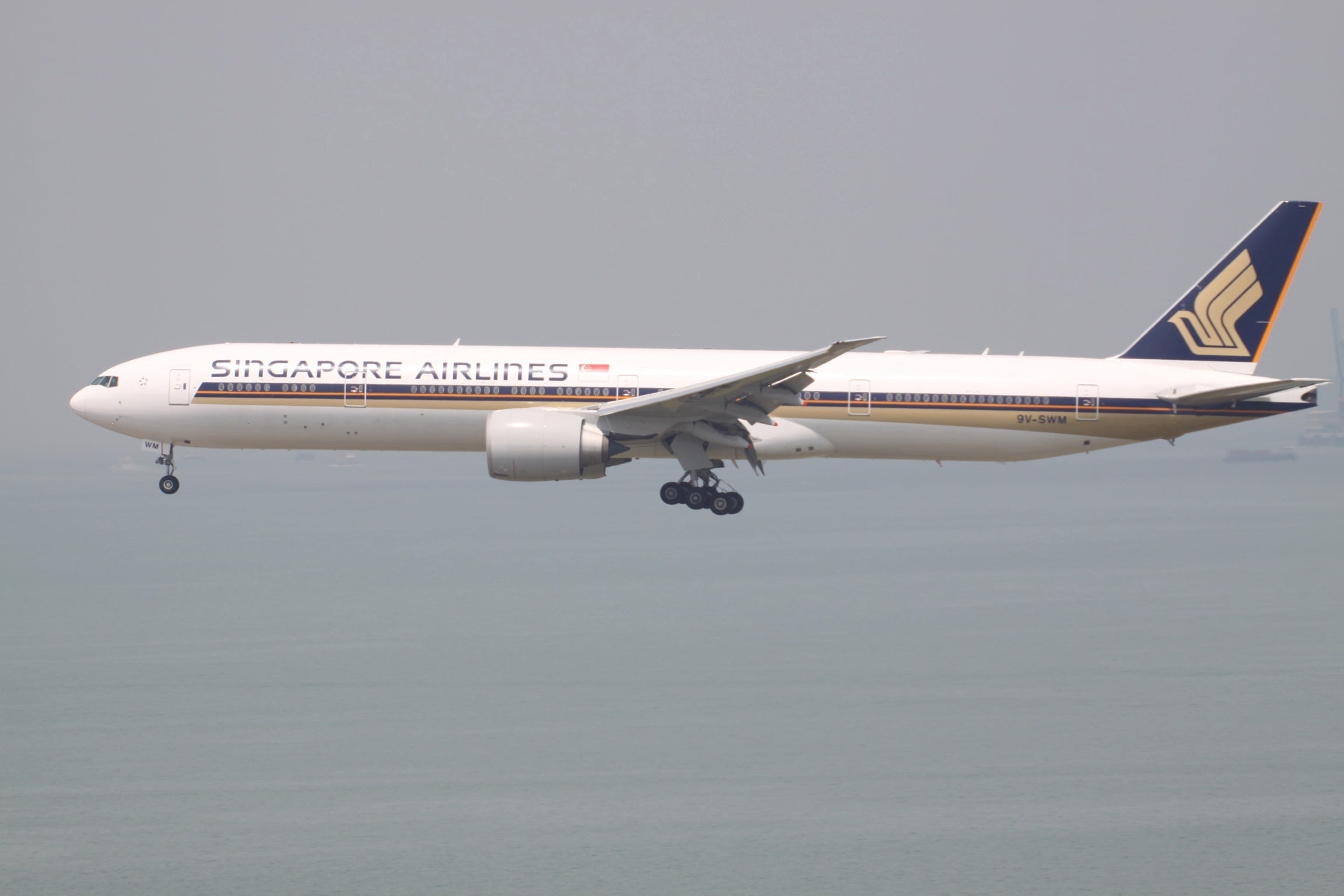
The TSIB final report on Singapore Airlines Flight SQ321, released in May 2026, is not simply the closing chapter on a tragedy. It is a documented indictment of an industry’s complacency — proof that the turbulence management systems most airlines still rely on were already obsolete before a single passenger left the ground on May 21, 2024.
The flight data recorder tells the story in numbers that are difficult to absorb. Over 17 seconds, vertical acceleration fluctuated between +0.44G and +1.57G. Then, in a single 0.6-second interval, G-forces collapsed from +1.35G to -1.5G. What followed — the upward violence, the ceiling impacts, the return to +1.5G, the broken bodies — happened in under four seconds. One passenger died. Seventy-nine others were seriously injured. What the numbers cannot convey is that the crew had done nothing wrong. The aircraft’s own radar had shown them clear skies.
That is the operational finding. The strategic finding is what airline leadership teams need to reckon with:
SQ321 was not an act of God. It was a system failure, compounded by a network gap, playing out in an atmosphere that is becoming measurably more hazardous.
Every airline that has not yet acted on the TSIB’s implications is flying with the same exposure SIA carried that morning over Myanmar.
The Anatomy of the Threat: CAT vs. Convective Updrafts
In the immediate aftermath of the incident, early industry commentary pointed to Clear-Air Turbulence — the invisible wind shear caused by colliding air masses at jet-stream altitudes, undetectable by conventional radar and entirely absent from weather displays. It was a reasonable first assumption. It was also wrong.
The TSIB’s final investigation revealed an entirely different, and more dangerous, phenomenon: convectively induced turbulence. Rather than encountering CAT, SQ321 flew directly over a rapidly developing tropical thunderstorm that was not presented to the crew as a significant threat. Meteorological data showed a cloud top in the area exploding vertically from 27,500 feet to 40,000 feet in just ten minutes. The aircraft likely encountered an updraft estimated at roughly 8,000 to 9,000 feet per minute, with vertical wind speeds peaking at 150 feet per second.
The operational riddle for investigators wasn’t the storm itself, but a total sensory disconnect in the cockpit. Three nearby commercial aircraft observed significant convective cloud activity and chose to deviate around the area. Yet, the SQ321 crew saw a clear flight path on their navigation screens, and their visual checks out the cockpit window indicated clear skies. While the radar manufacturer found no structural defects in post-incident testing, maintenance logs revealed this specific aircraft’s radar had failed to display weather just six days prior. The TSIB Investigators concluded that the aircraft’s radar may have under-detected or failed to display the severity of the weather ahead, catching the pilots completely off guard.
The Legacy Blueprint: Why the Old Defenses Failed
The SQ321 investigation did not expose a crew failure. It exposed the structural obsolescence of a turbulence management doctrine that hasn’t fundamentally changed in forty years. Three interlocking systems form the backbone of that doctrine — and SQ321 stress-tested all three simultaneously.
The PIREP System, where pilots encountering bumps manually radio Air Traffic Control to issue a Pilot Report (PIREP), warning trailing aircraft.
Pre-Flight Planning, when dispatchers analyze static numerical weather prediction models and classical aviation metrics like the Ellrod Index to map flights around projected jet stream boundaries.
In-Flight Tactics, where crews monitor their onboard Doppler radar for precipitation, turning on the seatbelt sign and slowing the aircraft to its designated turbulence penetration speed when entering bumpy air.
The SQ321 report highlights the breakdown of this legacy system. The pilot activated the seatbelt sign as soon as the initial vibrations started, but the severe -1.5G drop occurred just 17 seconds later. There was simply no time for the cabin crew to secure the cabin or make a public announcement.
Furthermore, PIREPs are inherently delayed and geographically imprecise. Relying on multi-minute manual radio lags to dodge hyper-reactive convective towers isn’t just an outdated tactic—it’s operational roulette.
The Strategic Shift: Navigating a Warmer Atmosphere
The reality of modern aviation strategy is that the upper atmosphere is becoming more energetic. Recent atmospheric research suggests that climate change is increasing upper-atmosphere instability and wind shear in some flight corridors, potentially contributing to more frequent or severe turbulence encounters. The environments modern airliners operate within may be becoming more volatile.
Faced with an invisible, fast-growing threat and a changing atmosphere, airline strategies are shifting from reactive crew training to predictive digital ecosystems.
1. Machine Learning and Crowdsourced Telemetry
Rather than waiting for manual pilot reports, a growing number of operators have adopted automated, real-time data streaming through IATA’s Turbulence Aware network. The platform harvests automated Eddy Dissipation Rate (EDR) data directly from aircraft avionics: when an aircraft encounters turbulence, its software instantly transmits objective, G-force-derived telemetry to a centralized cloud, available in real time to dispatchers and flight crews at every participating carrier.
The platform has grown substantially. By mid-2025, 28 airlines across 2,800 aircraft were contributing live data, generating 24.8 million turbulence reports in the first six months of the year alone — a 23 percent increase over the same period in 2024. Emirates has integrated the system across more than 140 aircraft and layered it with additional AI platforms; Qatar Airways, one of the earliest participants, has equipped more than 120. For Airbus operators, the barrier to entry is relatively low: EDR reporting is enabled via a software upgrade on A320 family and A330 aircraft, and a firmware update on the A350.
This isn’t just raw data collection; it’s predictive modeling. New hybrid frameworks are feeding this real-time EDR data into machine learning models—specifically Random Forest and Multi-Layer Perceptron architectures—to give dispatchers the foresight to reroute flights before they ever approach a volatile sector.
