
The $19 Billion Tollbooth: Is JFK's Privatization Putting the Fox in Charge of the Henhouse?

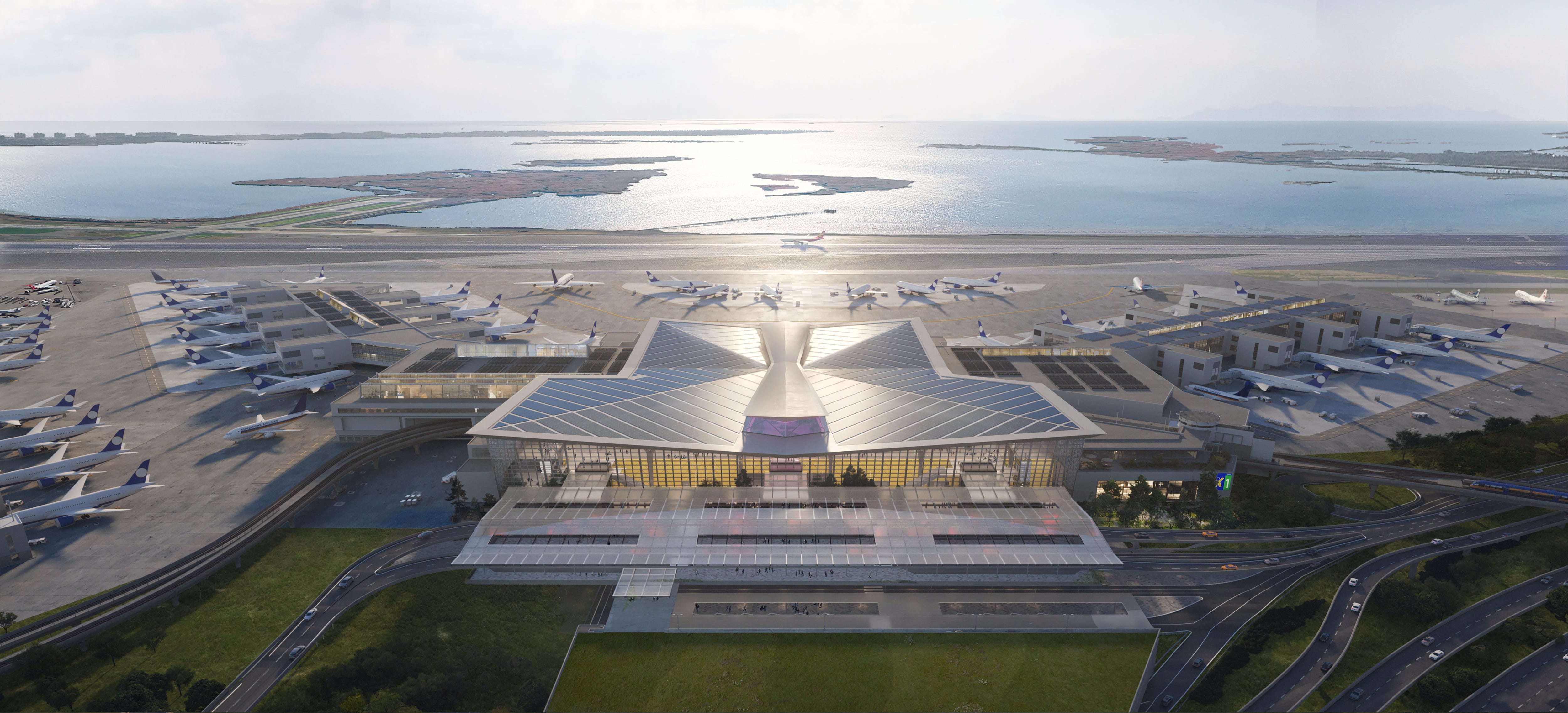
John F. Kennedy International Airport is in the midst of a historic, jaw-dropping physical transformation. The sweeping $19 billion redevelopment is replacing aging, subterranean-feeling concourses with soaring glass facades, cutting-edge biometric security, and premium retail hubs. By the end of 2026, the first shiny new gates of both the $9.5 billion New Terminal One (NTO) and the $4.2 billion Terminal 6 are scheduled to welcome their first commercial flights. On its surface, it is a gleaming triumph of modern infrastructure.
But beneath the polished terrazzo floors lies a quiet, foundational shift in how the world’s premier gateways are funded — and who they are built to serve.
By offloading nearly the entire financial burden of this massive modernization to private consortia, the Port Authority of New York and New Jersey achieved a masterclass in capital efficiency. Local taxpayers are largely off the hook for a project that would otherwise dominate municipal balance sheets for a generation. Yet, from a World Airline Strategy perspective, this aggressive pivot to a pure public-private partnership (P3) model carries an invisible, structural cost. By surrendering multi-decade terminal control to private equity firms, international infrastructure giants, and mega-carrier anchor tenants, we are sleepwalking into a paradigm where market equity is traded for private yield.
The real danger is not to the global alliances or the household-name domestic airlines. The danger is to the vital, low-frequency international carriers that treat JFK as their solitary, high-stakes bridge to the United States.
How Airlines Have Always Been Charged — And Why That’s About to Change
To understand what’s genuinely new about the JFK model, you first have to understand how airport fees normally work in the United States — a system most travelers, and even many industry watchers, never think about.
Under federal law, virtually every commercial airport in the country operates under FAA grant assurances tied to the Airport Improvement Program. Two principles govern almost everything that follows: fees charged to airlines must be “fair and reasonable“ and applied “without unjust discrimination.” Airports aren’t allowed to treat a five-times-weekly niche carrier worse than a hometown mega-carrier just because they can. And critically, airport revenue can only be spent on the airport itself — a public sponsor can’t skim profit off the top and divert it elsewhere.
Within that framework, airports typically set airline rates one of three ways: residual, where the airlines collectively backstop any shortfall in the airport’s costs but also share in surplus revenue from parking and concessions; compensatory, where the airport itself absorbs the financial risk and simply charges each user for the costs it actually generates; or a hybrid of the two.
Most large-hub U.S. airports also negotiate these terms through a bilateral Airline Use Agreement with their signatory carriers, often including majority-in-interest provisions — meaning a supermajority of the airlines actually using the airport has to sign off before major new capital projects or rate hikes go forward. It’s an imperfect system, but it gives every signatory airline, large or small, a seat at the table and a federal reasonableness standard to fall back on if they don’t like the outcome.
JFK’s new terminal model doesn’t operate this way.
Instead of the Port Authority negotiating collectively with its airline tenants, entire terminals have been leased whole — for the life of the asset, through 2060 — to private consortia who then set gate fees, common-use charges, and concession terms directly with the airlines who fly there. The Port Authority still holds the airfield-wide grant assurance obligations that keep landing fees in check, but inside the terminal walls, the traditional bargaining table — the one where a small flag carrier could lean on federal reasonableness standards and collective airline leverage — has effectively been replaced by a private landlord with $9.5 billion or $4.2 billion in construction debt to service. That is the structural shift this piece is about.
