
First SIN, Then Go to HEL
The Secret History of Airport Codes

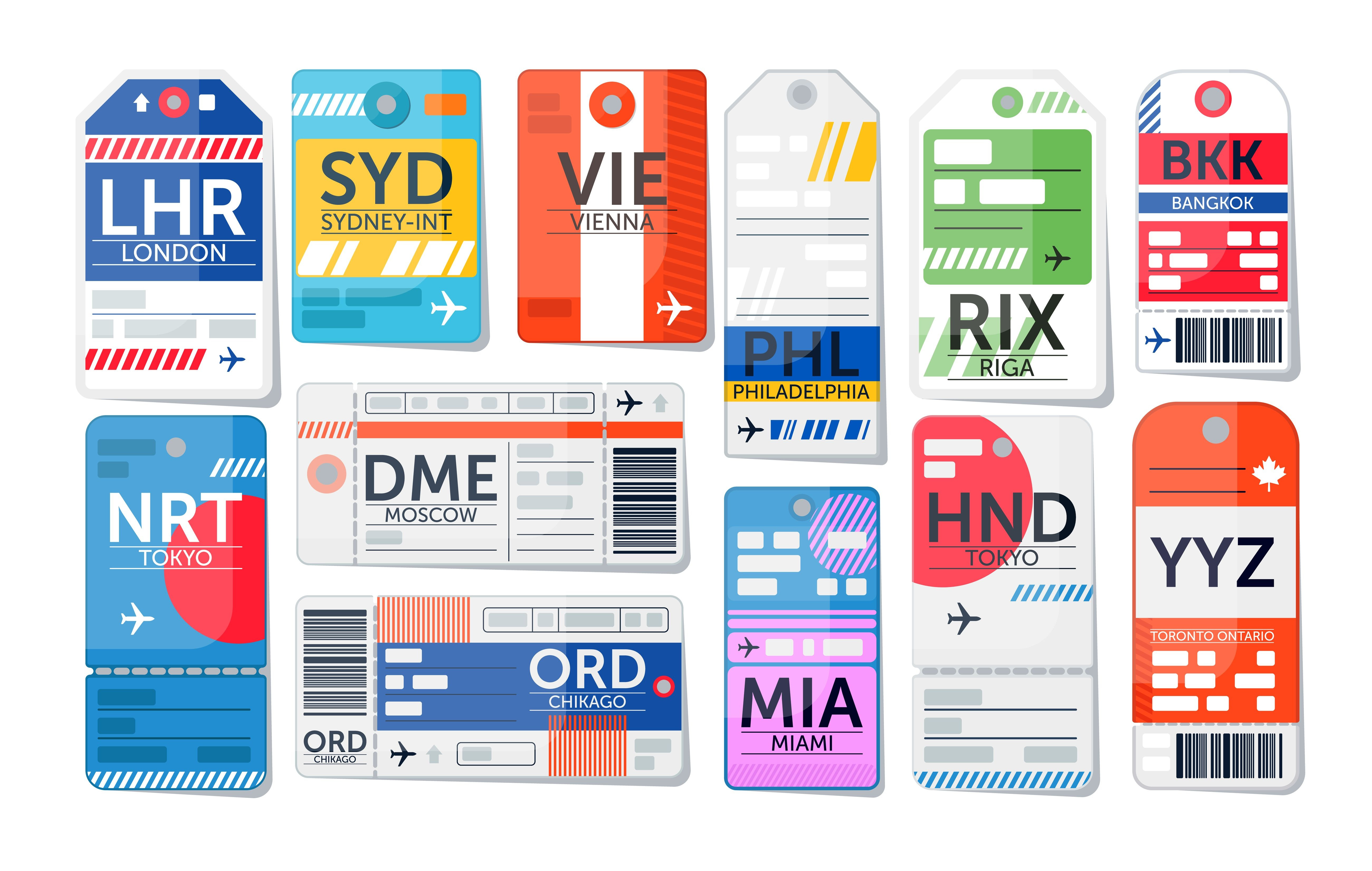
If you have ever stood at a baggage carousel, watching the black rubber belt hum along in quiet defiance of time, you have participated in one of aviation’s oldest puzzles.
Those three-letter airport codes—known as IATA identifiers—are the DNA of global travel. They appear on your boarding pass, your luggage tag, and your flight app. We rely on them without thinking. But they are not random. They are fragments of history—military, linguistic, political, and occasionally absurd—stitched together into a system that the entire world somehow agrees not to change.
And once you start looking at them closely, you realize something else: The map has a sense of humor. You could, for example, book a perfectly legitimate itinerary that allows you to SIN on a Friday night and wake up in HEL by Saturday morning. Morally questionable? Perhaps. Operationally routine? Absolutely. It is just a flight from Singapore to Helsinki.
When Two Letters Were Not Enough
In aviation’s early days, simplicity ruled. Airports borrowed their identifiers from existing weather station codes—usually just two letters. Los Angeles was LA. Portland was PD. San Francisco was SF.
But by the mid-1940s, aviation had a problem. Two letters only allowed for 676 combinations, and the world was suddenly very interested in flying. In 1947, the system expanded to three letters, a leap that increased the possibilities to 17,576 unique identifiers.
Some cities took the path of least resistance, simply adding an “X” to their existing code. That is how we got LAX, PHX, and PDX. The “X” did not stand for anything; it was aviation’s version of “we needed another letter, and this one was available.”(San Francisco elected to add the last letter of the city’s name instead of an “X."
Ghosts in the System
Some airport codes are not descriptions—they are fossils. Take Chicago O’Hare (ORD). The code seems like a typo until you realize it is a ghost. Before it was named after naval aviator Edward “Butch” O’Hare, the site was Orchard Place. The orchards are long gone; the code remains.
Other codes tell stories of accidents and airbases:
MSY (New Orleans): Stands for Moisant Stock Yards. It was named after John Moisant, an aviation pioneer who crashed into a cattle pasture on that site in 1910.
MCO (Orlando): While tourists expect Mickey Mouse, they land at a relic of the Cold War—the former McCoy Air Force Base.
BNA (Nashville): Named for Berry Field, a name largely lost to time for the average traveler.
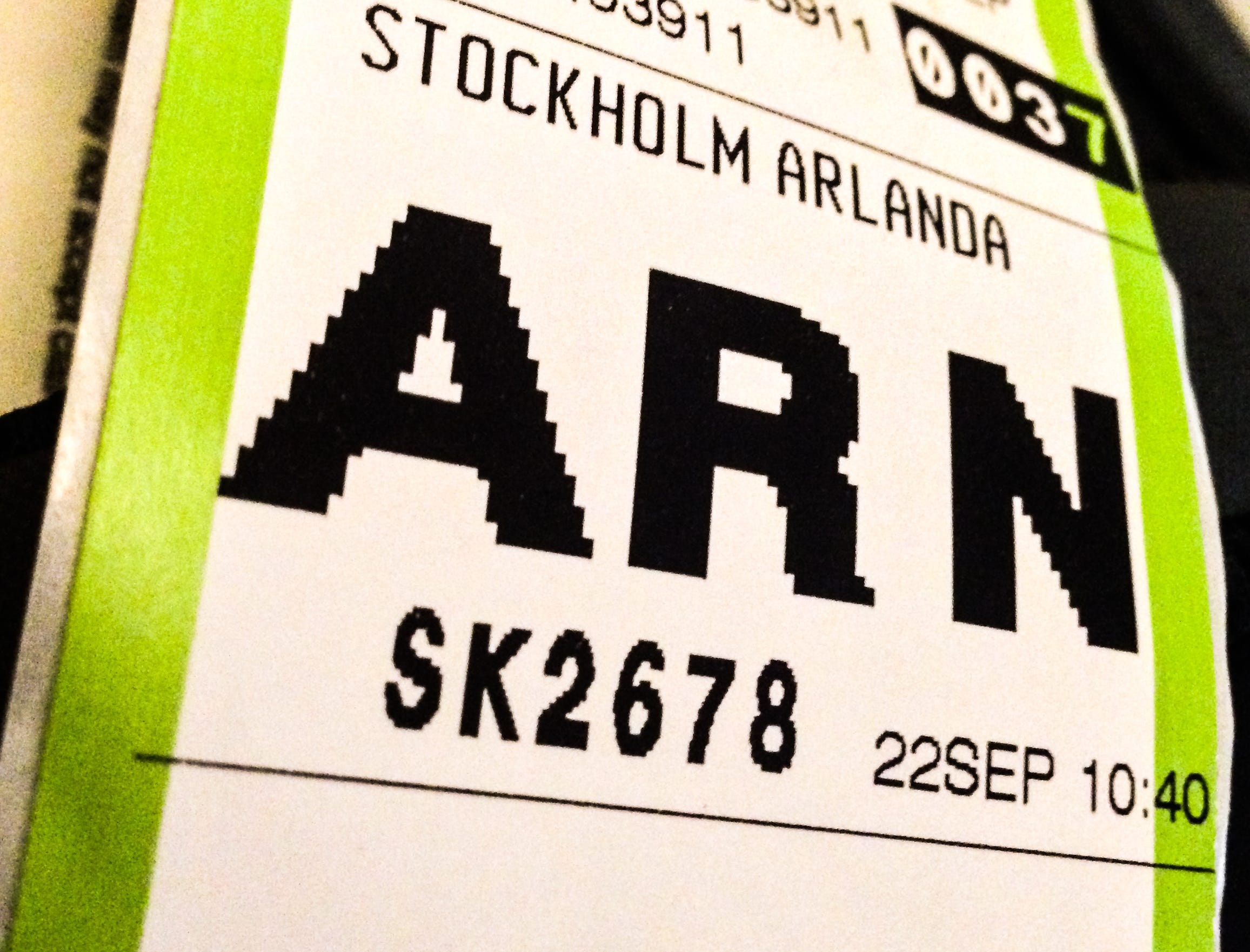
Even modern “engineered” names have deep roots. Stockholm’s main hub, Arlanda (ARN), was named via a contest in 1959. It is a linguistic hybrid of Ärlinghundra (the local parish) and Landa (the Swedish verb “to land”). It literally translates to “The place to land in Ärlinghundra.”
The Inertia of History
If domestic codes preserve local history, international ones preserve global politics. Fly to Beijing and your baggage will be tagged PEK (Peking). In Vietnam, decades after the end of the war, your suitcase still travels to SGN (Saigon). Mumbai remains BOM (Bombay).
These are not oversights; they are calculated decisions. Changing an airport code is not like changing a street name. It would require updating global reservation systems, airline databases, ticketing platforms, cargo logistics, and millions of internal processes. The cost—and the risk of a systemic “glitch”—would be enormous.
Aviation made a choice: It is better to be historically wrong than operationally broken.
Most of my weekly features cover deep dives into lesser-known airlines, airline strategy, and aviation issues and topics of interest—like this one. I have unlocked this specific article for everyone to read FREE this week to showcase the depth of research I bring to World Airline Strategy. If you find this valuable, please consider a paid subscription to support independent aviaiton journalism.
The Canadian Exception
Then there’s Canada, which quietly built its own logic. Almost all major Canadian airports begin with the letter “Y”: YVR (Vancouver), YUL (Montreal), YYC (Calgary), and the famous YYZ (Toronto Pearson).
The reason goes back to early weather reporting stations. A “Y” prefix indicated a station was co-located with a radio tower or weather data source. While the US reserved “K” and “W” for radio stations and “N” for the Navy, Canada leaned into the “Y.” The system stuck, making Canada the only country where airport codes follow a recognizable national pattern.
A Short Hop Through the Absurd
IATA’s system was never designed for tourists; it was designed for dispatchers and logistics planners. Efficiency mattered more than intuition. But when you apply a rigid three-letter system to the infinite variety of global names, the combinations eventually write themselves.
Some airports have simply decided to embrace the joke:
SUX (Sioux City, Iowa): After trying to change it twice, the airport leaned in. Today, you can buy “Fly SUX” hoodies in the terminal gift shop.
LIT (Little Rock, Arkansas): Perfect for a Friday night departure.
PIE (St. Pete–Clearwater, Florida): The best destination for dessert lovers.
FAT (Fresno Air Terminal): An unfortunate acronym for a city known for its agriculture. (Or those who spent too much time in PIE)
PEE (Perm, Russia) & POO (Poços de Caldas, Brazil): Proof that some airport accidents do not involve airplanes.
We could even discuss the code for Fukuoka, Japan, but I will leave that to your imagination. I am not that stupid. DUH—which, as it turns out, is the code for Toledo Suburban Airport.
The Time Capsule in Your Pocket
Airport codes are one of the last places in modern travel where history is allowed to remain inconvenient. Cities rename themselves, governments fall, and airlines merge into oblivion, but the code stays.
ORD still remembers orchards. MSY still remembers cattle. PEK still remembers a different China.
The next time you find yourself at the gate, staring at a cryptic three-letter code on your boarding pass, don’t assume it is random. It is a fragment of a story—sometimes logical, often outdated, occasionally ridiculous, but always real.
And if your itinerary takes you from SIN to HEL? Don’t worry. In aviation, that is not a moral journey. It is just another day at the office.
Thanks for reading this special “unlocked” feature.
I hope you enjoyed this look at the linguistic and historical fossils hidden in our boarding passes—from the “ghost” of Orchard Place (ORD) to the accidental humor of SUX and POO.
I usually reserve these deep dives for my paid subscribers. If you want to support my research and receive weekly strategy reports on the global airline industry, please consider joining the World Airline Strategy inner circle.
Since I made this week’s feature free to everyone, please feel free to share this post with your colleagues, fellow aviation geeks, or anyone who has ever wondered why their luggage is tagged for a “cattle pasture” in New Orleans.
Fascinating read, David! Some of this I knew, and I learned a few things. There's always more to learn! So thank you! We just connected on LinkedIn.
John M