
Nobody to Push Back the Plane.
Why your $300 million jet is grounded by an $18 an hour baggage loader

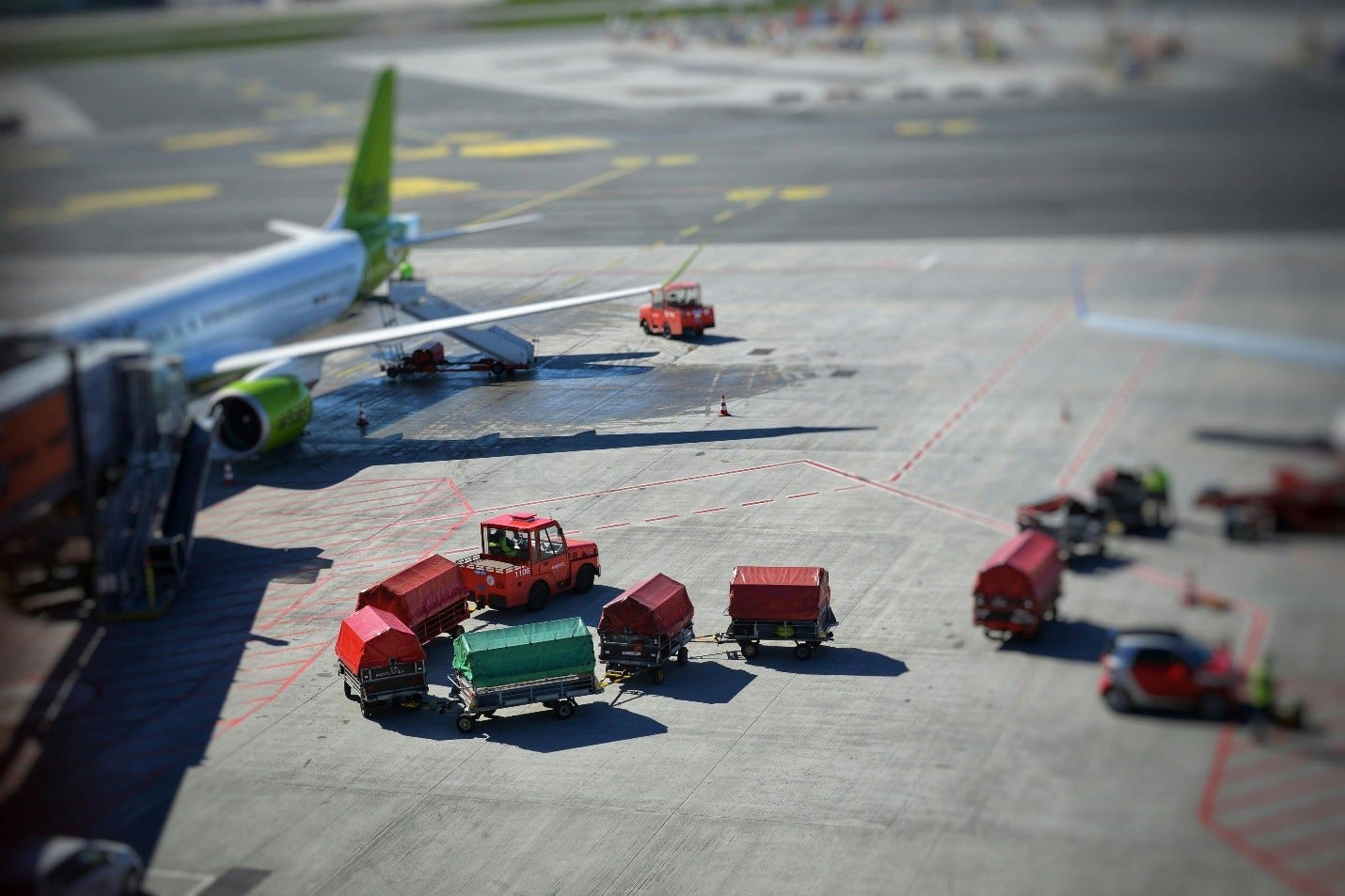
The $300 million Airbus A350 sits at the gate, engines humming, ready to cross an ocean. Pilots have completed their checks. Flight attendants stand by the door with practiced smiles. Three hundred passengers are buckled in, phones switched to airplane mode.
Then the departure board flickers: DELAYED 45 MINUTES.
The culprit isn’t weather. Not a mechanical issue. Not air traffic control.
It’s the baggage cart. More precisely, the absence of the person who should be driving it.
Welcome to aviation’s most invisible crisis: the ground handling shortage that’s quietly breaking the industry.
The People You Never Notice
They’re the first humans you see when your plane lands and the last when it departs. Ramp agents marshaling your jet with orange wands. Baggage handlers tossing suitcases under midnight floodlights. Fuelers threading hoses beneath wings. Caterers restocking galleys. Cleaners racing through cabins during 45-minute turns.
Mention airline employees to the traveling public and they immediately think of pilots, flight attendants, and maybe the agents at check-in. Yet most passengers never think about ground handlers at all — until something goes wrong.
Right now, something is going very wrong.
In 2025, IATA recorded just under 5 billion passenger journeys worldwide, while the U.S. Department of Transportation reported that American carriers alone handled more than 906 million passengers — both figures approaching or exceeding all-time records. The invisible infrastructure turning those volumes is hemorrhaging experienced workers at an alarming rate, and the consequences are rippling through every departure board in the world.
The Exodus Nobody Saw Coming
According to an IATA study conducted by Oxford Economics, the aviation industry lost about 2.3 million jobs during the pandemic, with ground handling and security among the hardest-hit areas. When flights stopped, ground handlers didn’t wait around — they migrated to warehouses, construction sites, and Amazon fulfillment centers. Many never came back.
Traffic has since rebounded to record levels, but ground operations never caught up. Major hubs are attempting to run today’s flight schedules with staffing levels that, in the worst cases, still haven’t recovered to 2019 baselines. When Heathrow imposed its famous passenger cap of 100,000 departing passengers per day in July 2022, the airport was explicit about the cause. “Airline ground-handler shortage is now the constraint on Heathrow’s capacity,” the airport stated publicly. “We estimate that airline ground handlers have no more than 70% of pre-pandemic resource, and there has been no increase in numbers since January.”
Amsterdam Schiphol imposed a similar cap — below 70,000 departing passengers per day — for the same reason during the same summer. Two of Europe’s three busiest hub airports, simultaneously capacity-constrained not by runways but by the people loading bags.
The statistics behind the shortage are stark. An IATA survey found that 60% of ground handling professionals felt they didn’t have enough qualified staff to ensure smooth operations, 37% anticipated staffing shortages continuing well beyond 2023, and 27% feared their current employees would leave soon.[1]
Japan illustrates how thoroughly the shortage transcended geography. A transport ministry panel found that 61 major airport ground handling companies employed approximately 21,600 workers as of December 2022 — roughly 20% below pre-pandemic levels. At Narita and Haneda, airlines were negotiating turnaround schedules with handlers who simply didn’t have enough bodies to meet them. The Pacific was no exception to what was happening at Heathrow.
“The ground handling sector is facing severe skills shortages as well as challenges in retaining and recruiting staff. Many skilled employees have left the industry and are not coming back.” — IATA, Ground Ops of the Future
