
Unauthorized Drones Are Testing Aviation’s Weakest Margin:
Why airlines can’t treat these incidents as rare anomalies anymore.

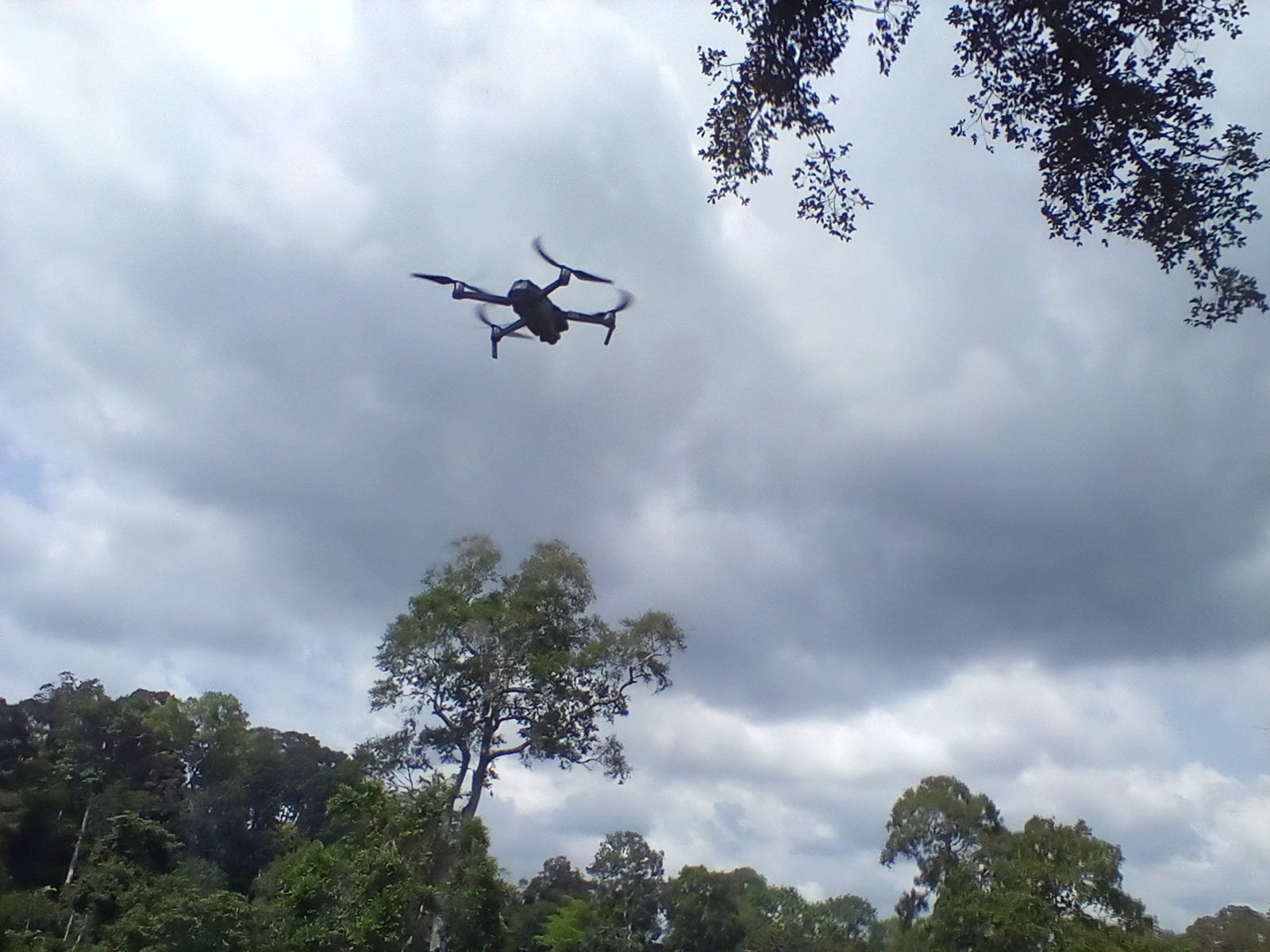
The air traffic control audio from New York terminal approach on Monday morning carried the kind of flat, professional calm that usually understates a crisis. “We collided with a drone back there in the turn,” the pilot of JetBlue Flight 948 reported as his Airbus A321 descended through 3,000 feet toward John F. Kennedy International Airport. “It hit us right above the cockpit.”
Just a couple of hours later, a helicopter near JFK reported another near-miss with a drone.
"Just almost ran into a gigantic RC airplane right over there at Floyd Bennett," the chopper pilot told air traffic controllers. "...a big one, at 500 feet."
Though post-flight maintenance crews miraculously found no structural damage, and the overnight flight from Las Vegas taxied to the gate without injuries, the industry cannot afford to treat this as a lucky escape. It came just 72 hours after United Airlines Flight 1513, a Boeing 737 carrying 111 souls into nearby Newark Liberty International, reported a near-miss with a three-foot-wide circular drone passing within 100 feet of its belly.
Consider the broader backdrop: the Federal Bureau of Investigation (FBI) revealed this week that it has seized more than 500 rogue drones breaching restricted airspace across the 11 U.S. host cities during the current 2026 FIFA World Cup matches.
The collision over JFK and the near-miss over Newark are not isolated incidents of reckless hobbyism. They represent a fundamental, structural disconnect between digital consumer technology and legacy physical infrastructure. For airline boardrooms and global aviation strategists, the message is stark: our terminal airspaces have become highly vulnerable kinetic chokepoints, and the regulatory frameworks designed to protect them are failing to scale.
The Cost to Carriers
For airline managers, the immediate question is not just whether a drone can bring down an airliner. It is what a drone report does to the system around the flight. Does the following aircraft execute a costly go-around? Does terminal radar approach control immediately freeze arrivals, forcing inbound flights into a holding pattern or triggering multi-hundred-mile diversions? Does the airplane need inspection? Does the event force a runway or airport response? Does it create a delay that cascades through the network? And with the razor-thin margins that already exist in the industry, what are the costs to an operator from these consequences of a single drone report?
Those are the questions that matter to operations people, because they translate directly into cost, schedule reliability, and public confidence.
The Myth of the “Bird Strike” Analog
For decades, aerospace engineers have optimized airframe and propulsion systems to survive impacts from foreign objects. However, treating a drone strike like a traditional bird strike is a severe strategic miscalculation.
Avian tissue behaves largely as a soft body on impact, liquefying and dispersing kinetic energy across a wide surface area. A commercial quadcopter is a hard-body hazard. It comprises dense carbon fiber, high-stiffness brushless aluminum motors, digital cameras, and volatile lithium-polymer (LiPo) battery cells.
Rigorous mechanical testing conducted by the FAA’s ASSURE research coalition and Virginia Tech’s CRASH Laboratory has demonstrated the devastating physics of these materials.[i] In high-fidelity computer simulations and physical destruction tests, an eight-pound consumer drone ingested by a mid-sized turbofan engine can completely shred titanium fan blades in less than 1/200th of a second.[ii]
Because drone components do not cleanly break apart, they generate hyper-velocity internal shrapnel that ricochets through the engine core, destroying downstream compressor stages and dramatically increasing the risk of an uncontained engine failure. Furthermore, at lower terminal velocities—such as during a 3,000-foot final approach—up to 60% of the drone’s LiPo battery mass can survive the initial impact. If these damaged, highly reactive cells become wedged inside a deformed engine cowling or unpressurized fuselage bay, they present a localized thermal runaway fire hazard that standard onboard halon suppression systems are not engineered to extinguish.
