
Don’t Compete. Win: Inside Avelo Airlines’ High-Stakes Shift to the Embraer E2
How Avelo Airlines built a business by refusing to fight

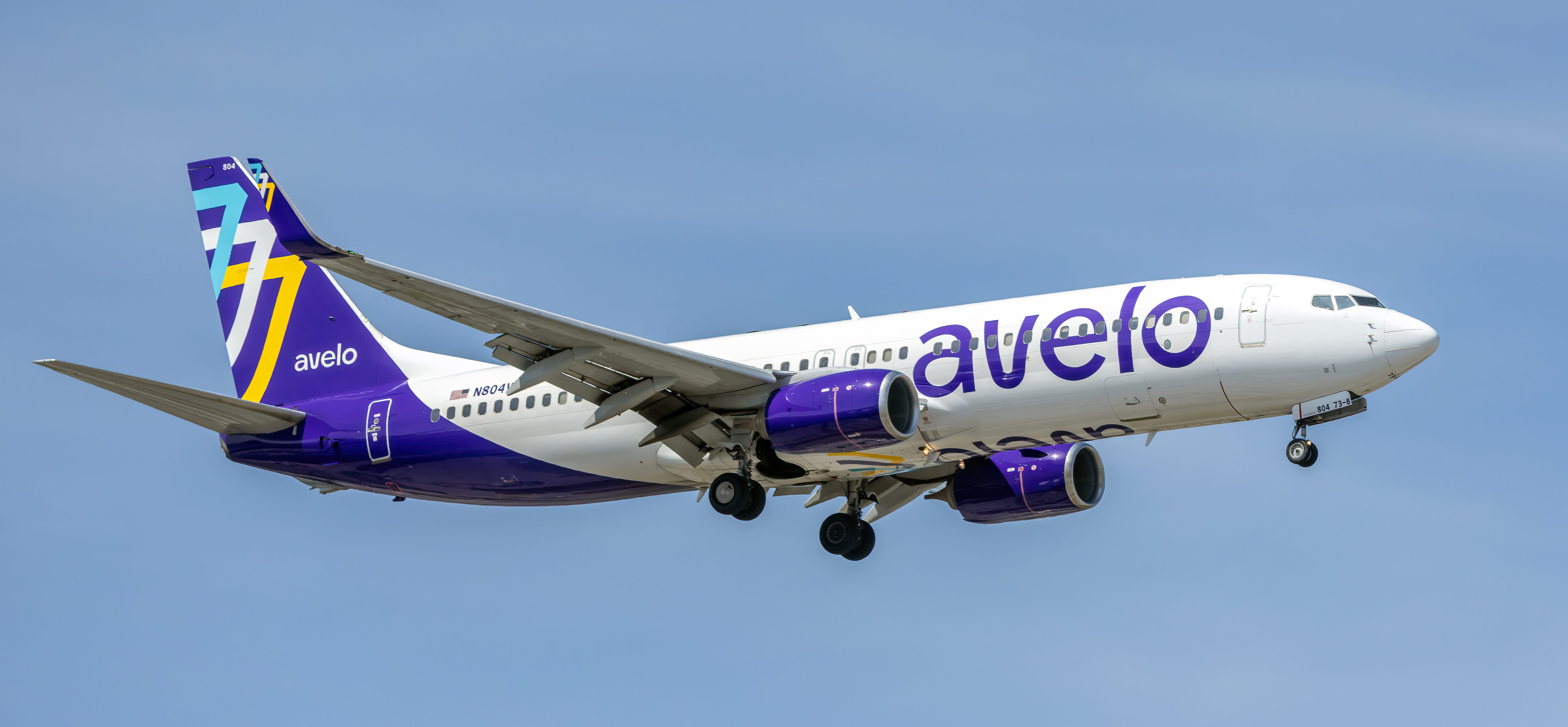
There is a counterintuitive principle at the center of Avelo Airlines’ business model, and Trevor Yealy, the carrier’s Head of Network and Revenue, states it with the confidence of someone who has watched it prove itself for five years.
“The best way to compete in the airline industry is to not compete — to find things you can carve out for yourself.”
It sounds almost too simple. In an industry that has historically treated itself as a zero-sum battlefield — where giants fight over gates at LAX and ULCCs try to siphon traffic in Orlando — Avelo’s founding thesis was: find the geography nobody is bothering to fight over, and own it completely. Five years in, that thesis has survived a pandemic launch, a West Coast retreat, a political firestorm, and a fleet overhaul. It is still standing.
The Origin Story Nobody Tells
Avelo is often described as a pandemic-era startup, which is accurate as far as it goes. What the shorthand omits is the more interesting corporate prehistory. Andrew Levy — formerly co-founder and president of Allegiant Air, and CFO of United Airlines — did not build an airline from scratch. He bought one.
The carrier Levy acquired in 2018 had begun life in 1987 as Casino Express Airlines, flying gamblers to a hotel-casino in Elko, Nevada. It had reinvented itself as Xtra Airways, operating charter work for sports teams, corporations, and political campaigns — including, most visibly, a sky-blue 737-800 that served as Hillary Clinton’s official aircraft during the 2016 presidential race. By the time Levy purchased it, Xtra was a modest charter operation. What it possessed was an FAA Part 121 Regularly Scheduled Air Carrier certificate — years of regulatory work that a startup would otherwise have to replicate from zero.
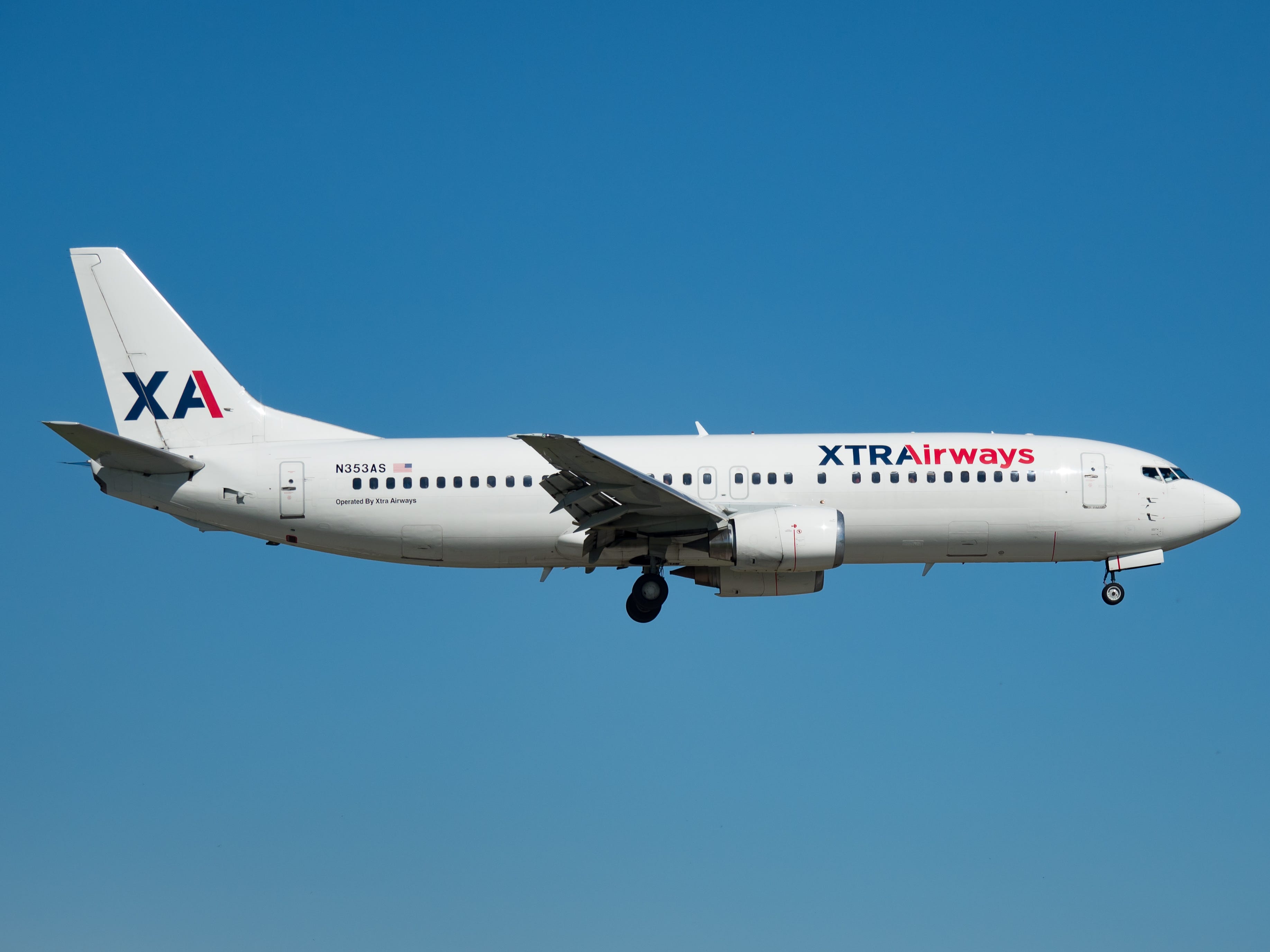
Levy kept a single 737-400 flying specifically to preserve that certificate. Then, in April 2021, armed with $125 million in seed capital from AQR Capital, he rebranded the operation as Avelo Airlines and launched scheduled service — the first new U.S. mainline carrier in nearly fifteen years.
That certificate acquisition is itself a small illustration of the strategic instinct that defines the airline. When everyone else is fighting for the same resources by the same rules, find the route around.
The Blind Spot That Built an Airline
To understand Avelo’s network logic, you have to understand what a decade of consolidation did to the American airport map. Post-merger, the legacy carriers retreated to their mega-hubs. Delta concentrated at Atlanta, Minneapolis, and JFK. United doubled down on Newark, Chicago, and Houston. American entrenched at Philadelphia, Dallas, and Miami. The result was a self-reinforcing cycle: big airports grew more congested, which made them more expensive, which made them more miserable — and the costs passed to passengers.
Scott Kirby of United has noted publicly that at certain primary airports the airport cost alone runs $50 per passenger. As Yealy observes, that makes the ULCC model of “charge less than everyone else” structurally difficult to sustain when the building you’re operating from is that expensive before a single seat is sold.
Levy’s read was different. The opportunity was not in undercutting legacy carriers on their own turf — Spirit and Frontier were already losing that fight — but in the suburban populations being systematically ignored: millions of travelers in dense, affluent metro areas who were geographically closer to a secondary airport but had spent decades driving to a hub because that was where the airlines were. The thesis, as Yealy describes it, was to replicate what Southwest had done forty years earlier: bring low-fare service to large populations through secondary airports the majors had abandoned or never bothered to develop.
New Haven: Holding Its Breath
When Avelo announced it would base aircraft at Tweed-New Haven Airport in Connecticut, the reaction ranged from puzzled to skeptical. New Haven is not a city that invites bold aviation investment. Its airport has a short runway that has historically kept mainline jets out. It sits roughly equidistant between Hartford to the north and LaGuardia and JFK to the south, either of which offers a traveler considerably more routing options.
What the skeptics missed was that LaGuardia’s routing options come attached to, well, LaGuardia. The new terminal is beautiful. The trek through New York traffic is not.
“We were holding our breath a bit,” Yealy told me. Studies showed New Haven was the closest drive for 1.5 to 2.5 million people across southern Connecticut and the Connecticut-New York border. The behavioral case was unproven. You can model catchment areas; you cannot model whether people who have spent twenty years driving to LaGuardia will change their habits because a new carrier asks them to.
They did. Avelo launched three aircraft on Florida routes from New Haven in November 2021, grew to five by summer 2022, and today operates seven based aircraft there in summer 2026, with additional aircraft positioning in to handle overflow. The short runway that once kept competitors out has become a moat.
The pattern repeated at Wilmington, Delaware — which, before Avelo, had the distinction of being the only American state having no scheduled commercial airline service at all — and at Concord Regional outside Charlotte, and Lakeland Linder in central Florida. In each case: find the airport in the backyard of a large population that other carriers have decided isn’t worth the complexity and give that population a reason to stop driving to the hub.
Gate 2 to Boarding: A Firsthand Look at ILG
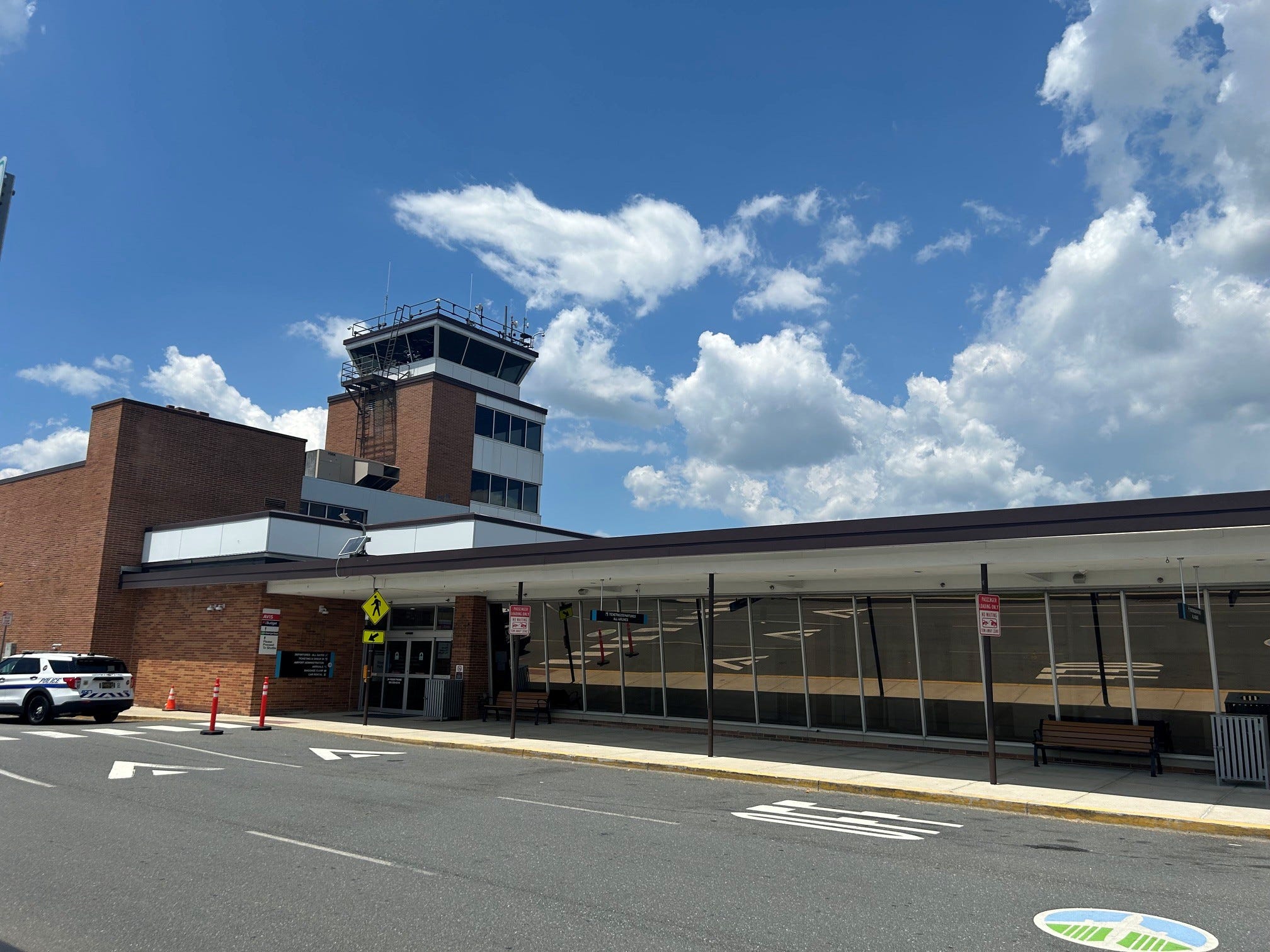
Wilmington Airport makes the theoretical concrete. The terminal is easily accessible from the Philadelphia suburbs, Delaware, and northern Maryland. Parking is a three-to-four-minute walk from the gate. On the day I flew Avelo, the security line had six people in it. The newly expanded departure lounge has two gates — one for Avelo, one for the American Eagle bus to PHL — and the hold room is comfortable without being ostentatious. “Throw a baseball from where you park your car to the plane” is, if anything, an understatement, although perhaps should not be advice taken too literally.
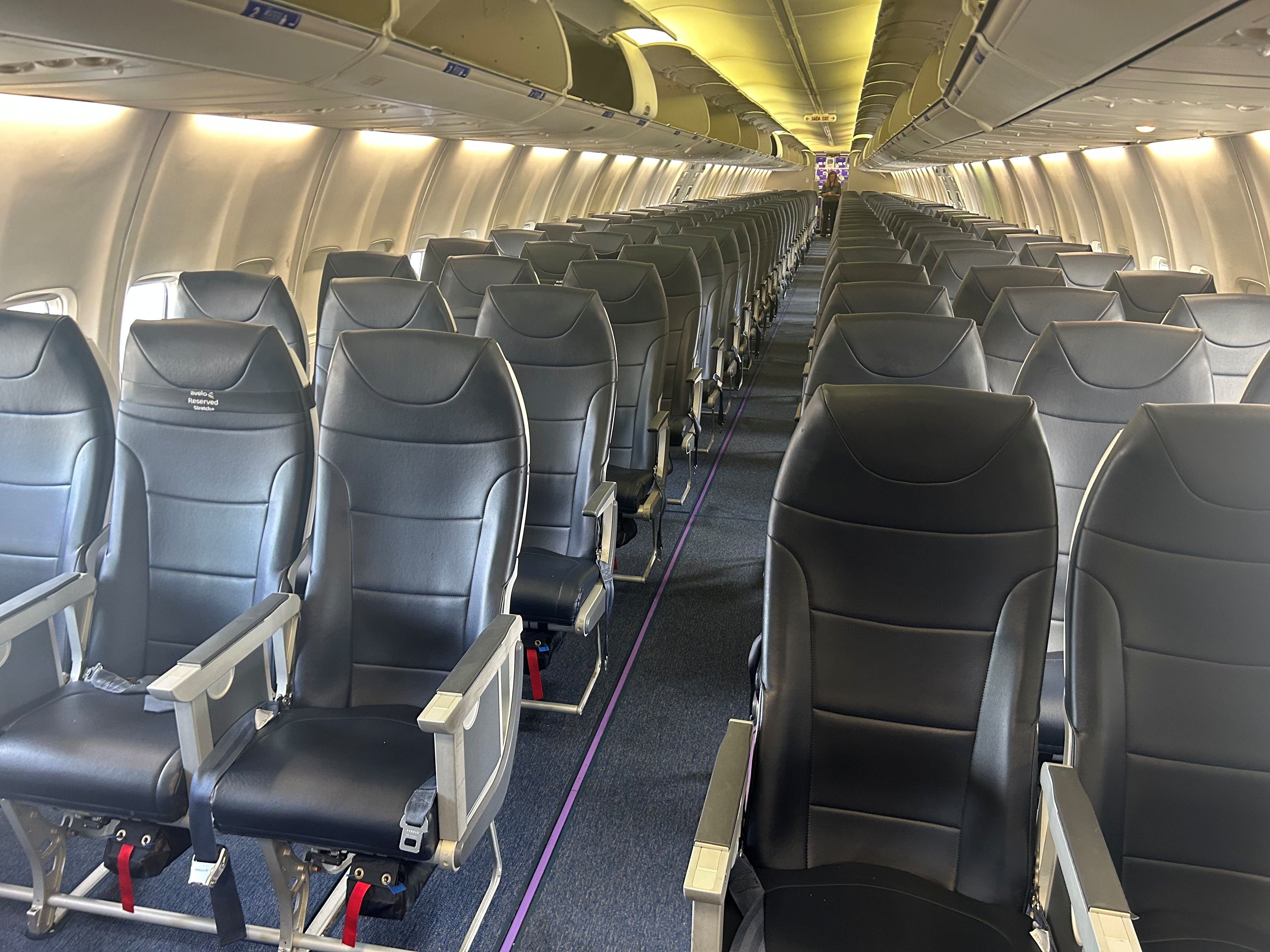
The onboard product is straightforward: 189 all-economy seats in a 3-by-3 configuration, 17 inches wide at 29-inch pitch, with a small number of Stretch Plus rows available as an upcharge at 32 to 36 inches. There are no power outlets, no USB ports, no Wi-Fi, and no inflight service — not even beverages for purchase. The flight attendants, friendly and professional, had little occasion to leave their jump seats during the 125-minute flight to Fort Lauderdale. This is an airplane configured for the purpose of getting you somewhere inexpensively. It does that.
The absence of amenities did not seem to trouble the passengers I spoke with. A couple with two children from Newark, Delaware, were heading to Fort Lauderdale for a family reunion. “The cost of flying from Philadelphia was so high that we were planning to drive,” they said. “Then we heard about Avelo, and this has been a great experience.” Another traveler, returning with his family to Chester County from a cruise, had flown both Spirit and Frontier previously and scored Avelo a ten out of ten by comparison.
“Better prices, lower add-on fees, and we love the convenience,” he said, unpacking sandwiches he’d picked up at a fast-food restaurant on the way to the airport. The man had done his own version of the unit cost calculation. He’d come out ahead.


_at_Miami_International_Airport.jpg)