
The Fifth Symphony: Inside David Neeleman’s Five-Year Ascent with Breeze Airways

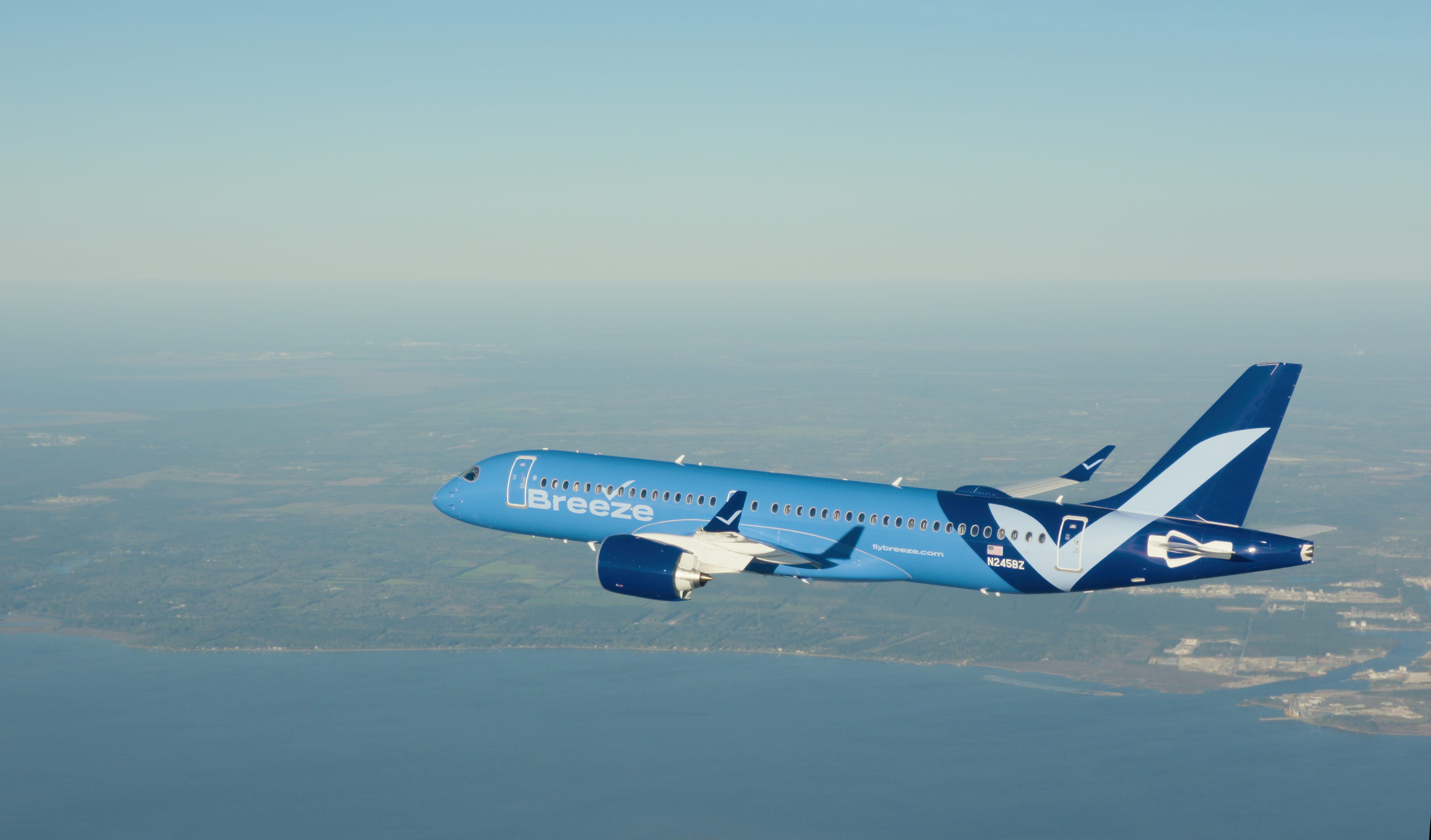
The maxim dictates: “If at first you don’t succeed, try, try again.” But what is the advice if you do succeed? In the case of the most prolific airline startup guru in aviation history, the mantra could well be: “If at first you do succeed, learn what worked, and try, try, try, and then try again.”
The crescendo of that repetition is Breeze Airways.
The first movement came early. David Neeleman was only 25 in 1984 when he and Utah travel agent June Morris co-founded Morris Air.
Long before airline analysts threw around terms like “industry disruptor,” Neeleman was cutting costs by having reservations agents work from home instead of expensive rented call centers, and utilizing recyclable plastic boarding passes. He embraced emerging technology early, making Morris Air the first airline in the world to implement electronic ticketing.
Neeleman and Morris sold the carrier to Southwest Airlines nine years later for $130 million.
The second was brief, almost transitional — a scherzo between larger statements. After a brief, tumultuous stint at Southwest, Neeleman headed north to help create WestJet—today Canada’s second-largest airline.
The third movement was his broadest, most ambitious statement. Two years later, he was back in the U.S. to launch JetBlue, a carrier still considered one of the country’s most customer-focused brands.
The fourth surprised even close observers — an unexpected modulation into a foreign key. By 2008, he had pivoted to Brazil—the land of his birth—where he launched Azul Brazilian Airlines, building a massive, highly profitable network utilizing Brazil’s homegrown Embraer E-Jets.
Which brings us to the fifth movement. And in the composer’s own estimation, the finest.
Moxy Airways was Born. Sort of.
Beginning in 2017, Neeleman began sowing the seeds for his fifth airline startup. He assembled a team of industry veterans, including former Air Canada CEO Robert Milton, JetBlue’s former chairman Michael Lazarus, and Henri Courpron, the former CEO of International Lease Finance Corporation (ILFC).
Neeleman made waves a few months later when he placed a firm order for 60 brand-new Airbus A220-300 jets for his newly incorporated entity, Moxy Airways. It was a memorable, punchy name—until Marriott Hotels politely reminded him of the trademark they held for their millennial-focused Moxy Hotels brand.
The costs of starting an airline are already astronomical; Neeleman had no desire to add a lengthy legal battle with Marriott to the ledger. On February 7, 2020, the name was officially changed to Breeze Airways. However, remnants of his first choice remain hidden in plain sight: Breeze flight numbers still start with the “MX” IATA code, and its air traffic control callsign remains “Moxy.”
Despite the widespread suspension of government departments during the COVID-19 pandemic, the Breeze team plowed ahead. On May 27, 2021, flight MX1 taxied out from the gate at Tampa International Airport, bound for Charleston, South Carolina.
In an exclusive interview with World Airline Strategy, David Neeleman reflected on that inaugural flight, noting that as Breeze celebrates its fifth anniversary, the airline is remarkably close to what he originally envisioned.
You’ve seen how David Neeleman built his empire —now see exactly how he plans to win the regional airline wars. Upgrade to the full executive experience and receive multiple dee-dive stories every week for $10/month—or lock in a full year of industry intelligence for $100 and save 17%
