
The Lion that Roared— and What Silenced It
How Government Policy can Make . . . or Break a Great Airline

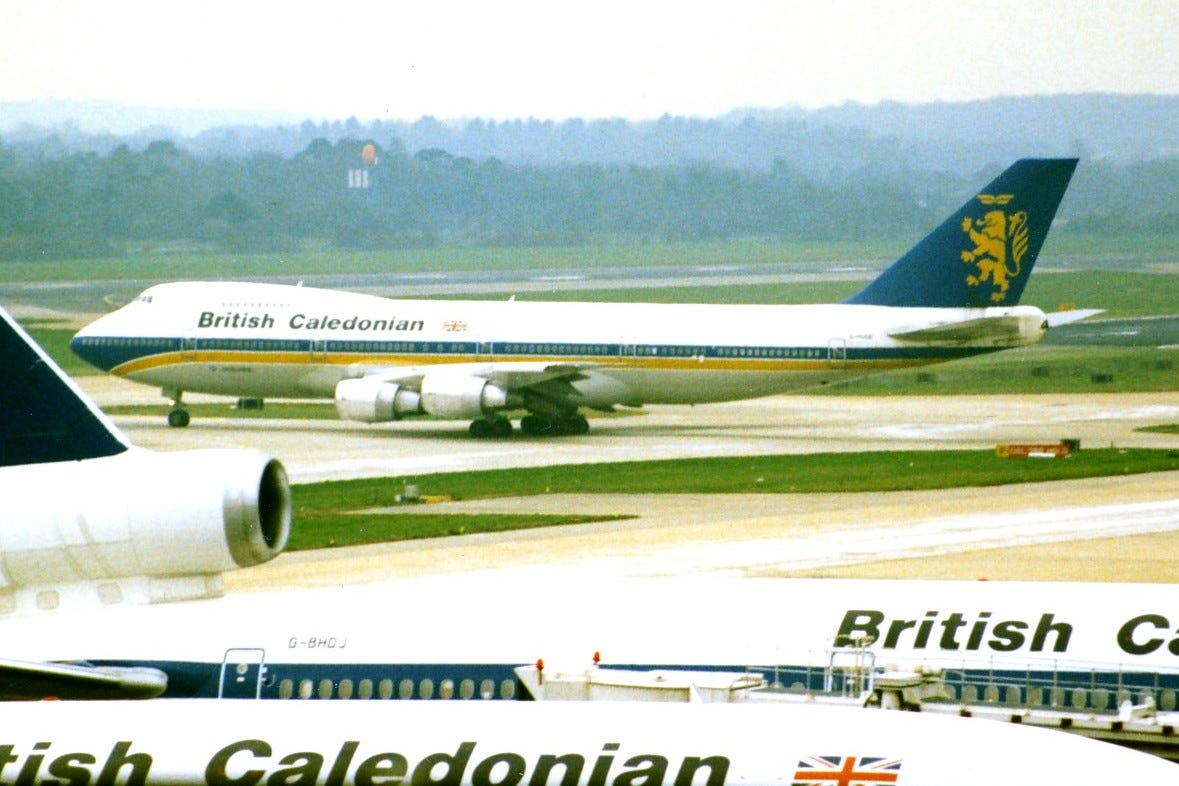
At one second past midnight on April 14, 1988, a proud airline ceased to exist. No crash. No fire. No dramatic distress call. Just the quiet, corporate finality of a balance sheet and a boardroom vote. British Caledonian Airways — BCal — was absorbed into British Airways, and the Scottish Lion Rampant that had adorned the tails of its jets for nearly two decades was, for all practical purposes, retired to the realm of aviation nostalgia.
It is a story worth telling, not just as a eulogy for a colorful carrier, but as a case study in what happens when an airline is caught permanently between two impossible realities: too large to be a boutique specialist, and too small to be a genuine heavyweight. That’s a no-man’s land from which very few airlines have ever escaped.
Born of Politics, Built on Pluck
BCal didn’t spring from the entrepreneurial imagination of some lone visionary. It was, in a very real sense, a government invention — or at least a government recommendation. In 1969, a parliamentary study called the Edwards Report took a long, hard look at British civil aviation for the first time since the end of World War Two. What it found was a duopoly: British European Airways and British Overseas Airways Corporation controlled the skies, and their grip was tightening.
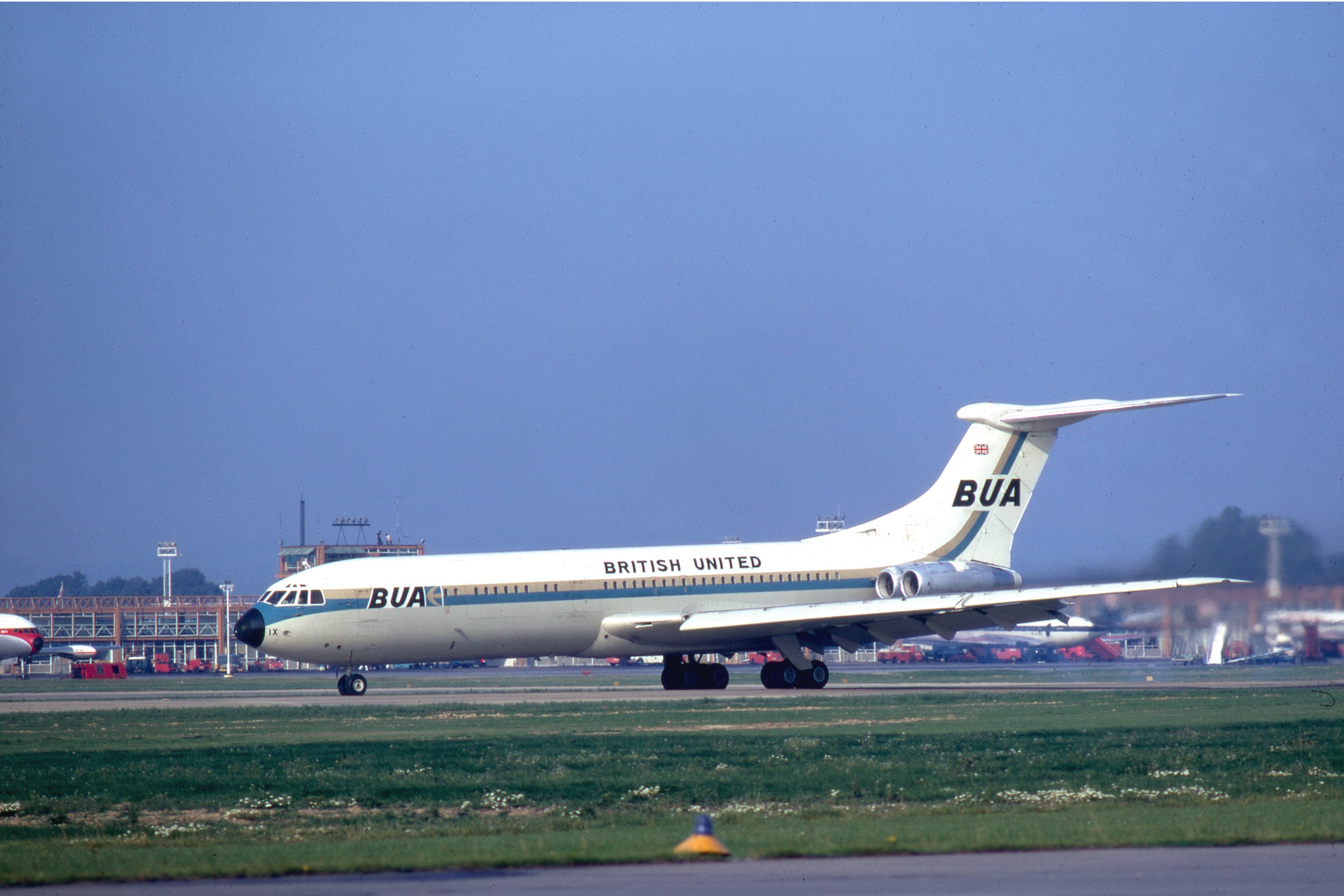
The report’s prescription was blunt. Merge the two state carriers — which eventually became British Airways in 1974 — and simultaneously create a privately-owned “Second Force” airline to keep them honest. That second force would be Sir Adam Thomson’s Caledonian Airways, which completed its purchase of British United Airways on November 30, 1970. The date was no accident. It was St. Andrew’s Day in Scotland, and the timing must have seemed fitting for a man who clearly understood the power of symbolism.
The new airline — rechristened British Caledonian Airways — was Scottish in identity from the start. Aircraft bore the names of famous Scots or celebrated Scottish places. The Lion Rampant appeared on every tail, rendered in gold against a deep navy blue. Cabin crew wore tartan. In an era when airline branding often amounted to a stripe and a logo, BCal understood instinctively what modern carriers have to spend millions to manufacture: a distinct, coherent identity.
