
Bermuda Gets an Airline
Breaking News: BermudAir Spreads its Wings

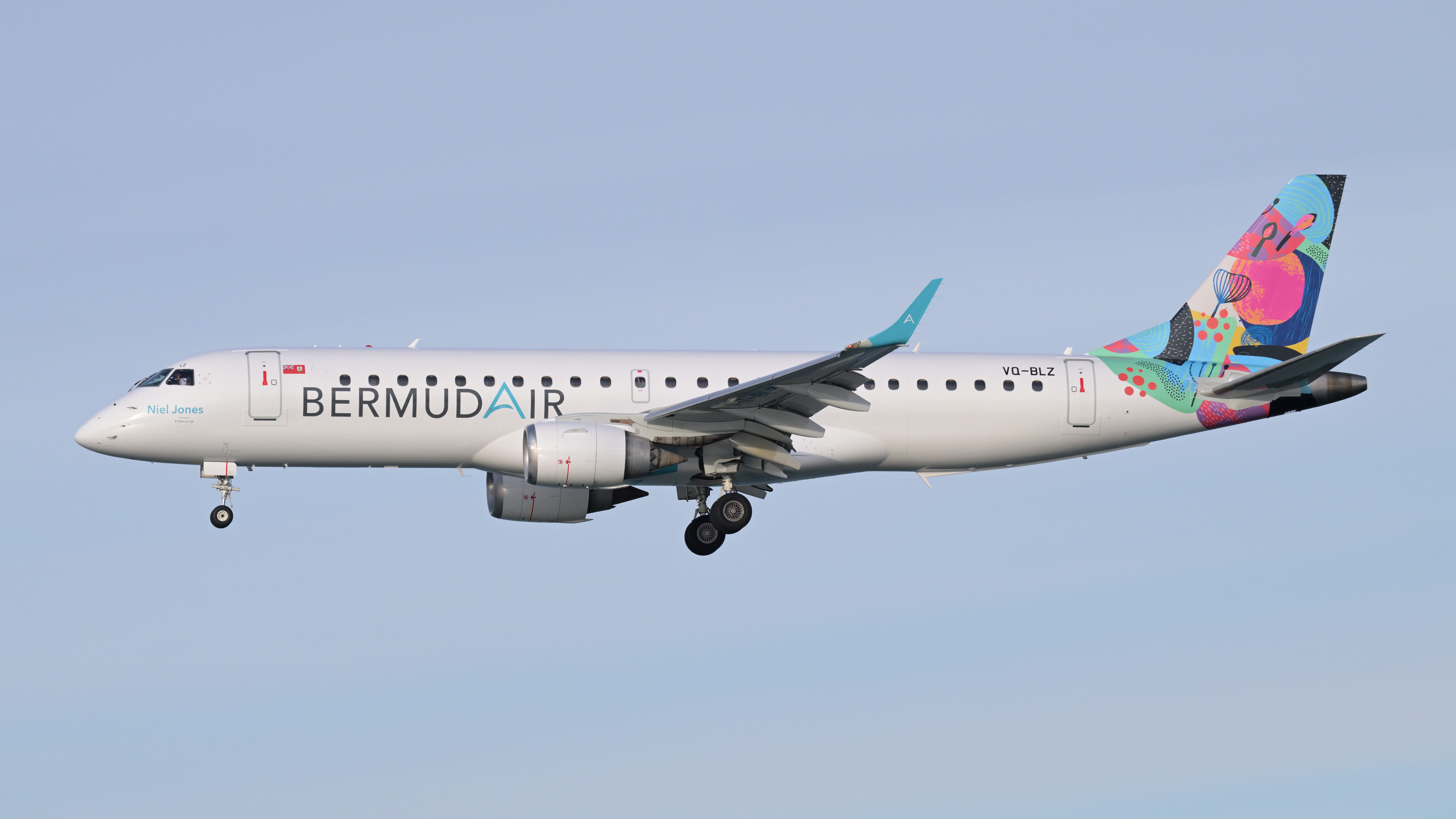
I have interviewed a lot of airline founders over the years. Most of them arrive at the idea the same way — a gap in the market, a spreadsheet, a pitch deck. Adam Scott arrived at his differently. He was sitting in Bermuda, talking with a friend, and he simply started listening.
That distinction matters more than it sounds.
The name alone evokes images of pink-sand beaches, pastel cottages, and turquoise water. Most visitors — and most aviation analysts — assume Bermuda’s economy rests on tourism. It doesn’t. Fully 85 percent of the island’s GDP flows from financial services and the reinsurance industry. What that means, practically speaking, is that Bermuda’s 64,000 citizens and residents don’t just need flights in May when the golfers arrive. They need them in January, when the Atlantic wind cuts across the sound and the last American carrier has already pulled its equipment back to Newark for the winter.
That is the problem BermudAir was built to solve — and the way it was built tells you something about what kind of airline it intends to be.
That leaves Bermudians with few reliable choices to fly to the mainland.
The Bermuda Pivot
Scott caught the aviation bug while working for Goldman Sachs, which eventually led him to conceive Odyssey Airlines in 2010 — an all-premium Airbus A220 operation from London City Airport to New York, spiritually descended from the British Airways all-business A318 service that the pandemic eventually killed. He was serious enough to place an order for ten A220s at the 2013 Paris Air Show.
But Bermuda kept pulling at him.
“After a while, I saw the opportunity to pivot away from my London-based airline to one that would be Bermuda’s very first airline,” Scott told me.

He pitched the Bermuda government. He pitched the local business community. He got assurances from both. In 2023, BermudAir was certificated and Scott was its CEO — and in a financing move that would have raised eyebrows at his former Goldman colleagues, he raised capital through a blockchain-issued digital bond rather than a conventional Wall Street offering. It was an early signal that this would not be a conventional airline.
Pivot to Plan B
The airline Scott envisioned would have felt at home among Bermuda’s clientele. With an average per capita income of $117,000, the island ranks fourth in the world — an affluent population that, Scott reasoned, would respond to something more than a seat and a bag of pretzels. He ordered custom pod-style business class seats from a UK supplier and placed an order with Azorra Leasing for two Embraer E175s. By July 2023, the Air Operator’s Certificate was in hand.
Then the supply chain did what supply chains do in this era of aviation: it failed him.
The premium seats were delayed by months. With the inaugural flight weeks away, Scott needed a Plan B — and on the morning of September 1, 2023, BermudAir lifted off from L.F. Wade International in St. George’s bound for Boston in ex-FlyBe aircraft with 88 economy seats. He capped sales at 44 per flight to preserve the feel of space, but they were economy seats. The Air Jamaica moment would have to wait.
Solving the Winter Blues
Here is where Scott’s thinking gets genuinely interesting to anyone who has watched Caribbean and Atlantic carriers struggle with the same seasonal trap for decades.
The problem is structural: when legacy carriers slash Bermuda service from October to April, inbound winter traffic for BermudAir dries up by definition. Most small island carriers simply idle capacity and hemorrhage fixed costs. Scott’s team went a different direction.
Anguilla, a tiny Caribbean island favored by upscale tourists, suffers from sparse direct airline service. BermudAir worked with the Anguillan government to create AnguillAir—a marketing sub-brand operating under BermudAir’s AOC. Because the E190 faced payload restrictions on the route that threatened profitability, the Anguillan government agreed to revenue guarantees for the unsold seats.
From December 2025 through April 2026—Bermuda’s slowest season and the Caribbean’s peak season—BermudAir kept its planes full by flying from Boston, Newark, and Baltimore to Anguilla.
“This counter-seasonality keeps our planes flying and our employees working all year round,” Scott told World Airline Strategy.
The Boutique Experience
There is no question Bermudians have warmed to having their own carrier. Scott reported to The Royal Gazette that the airline has generated more than $149 million in economic benefits for the island.
As BermudAir approaches its third anniversary, Scott argues the proof is in the data: “It is clear there is a strong demand for direct short-haul and premium flights between Bermuda and the East Coast.”
The onboard product reflects this boutique approach. Seats feature a 31-inch pitch configured 1x2 in economy, and a 33-inch pitch in business class. Meals in business and snacks in economy are sourced from local Bermudian caterers, while drinks and Wi-Fi are entirely complimentary.
“Do you remember the good old days of Air Jamaica when they would advertise, ‘Your holiday begins the moment you step on board’?” Scott asks. “That’s what we are creating at BermudAir.”
