
The "A320 Glider” Crisis: Why Your 2026 Growth Strategy is Sitting on a Tarmac in Toulouse
How Boeing and Airbus Are Cannibalizing Airline Balance Sheets.

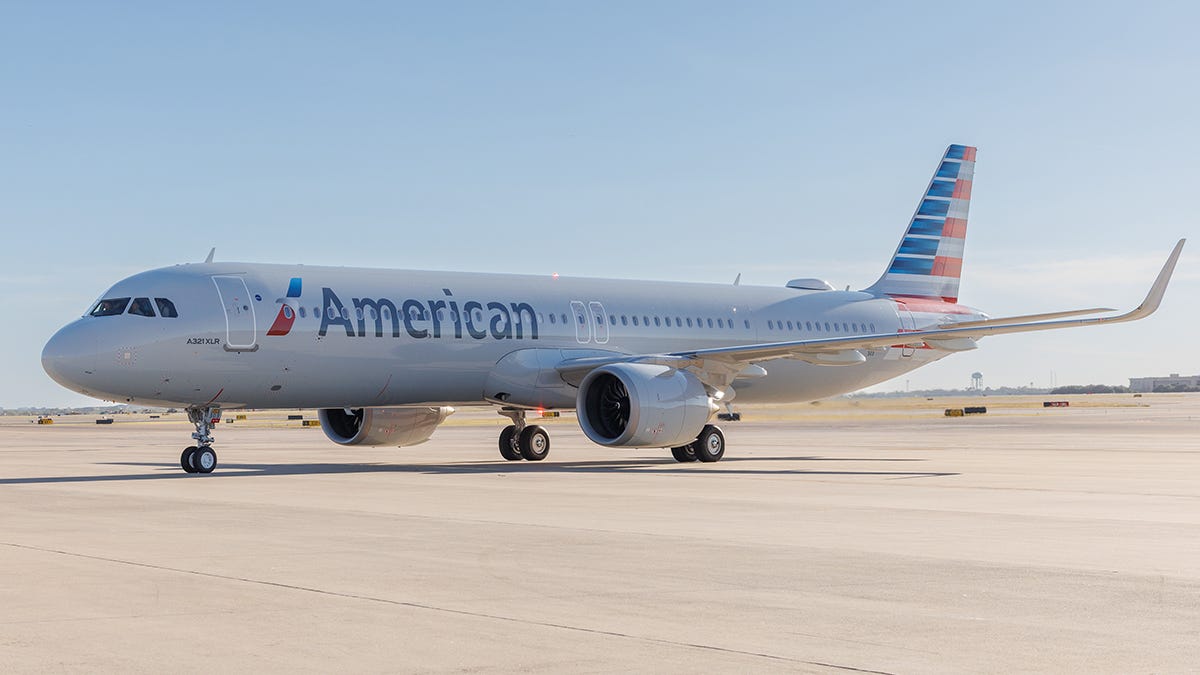
On the tarmac outside Toulouse, there are brand-new Airbus A320neo airframes worth $120 million apiece sitting in the sun with empty engine pylons. They cannot fly. They are waiting for Pratt & Whitney to deliver the GTF engines that will bring them to life—engines that, in some cases, have been on order for more than two years. In the industry’s leaner years, we called planes without buyers “whitetails.” Today, we have a new name for planes without engines: “gliders.”
The Numbers Behind the Logjam
The scale of the “unfilled order” is difficult to overstate. Boeing’s recently released Q1 2026 earnings call disclosed a backlog of more than 6,100 commercial jets—4,830 of which are for the 737 MAX series. Meanwhile, Airbus reported a backlog of 9,031 aircraft, comprising 7,870 narrowbodies and 1,161 A330/A350 widebodies.
Why such a massive backlog?
The post-pandemic travel surge caught the industry off guard, particularly in emerging markets like Asia and Africa. This demand hit exactly when the supply chain was at its weakest. Boeing and Airbus are still struggling with:
Persistent shortages of aircraft interiors and engine components.
Boeing’s quality control crisis, leading to FAA production caps.
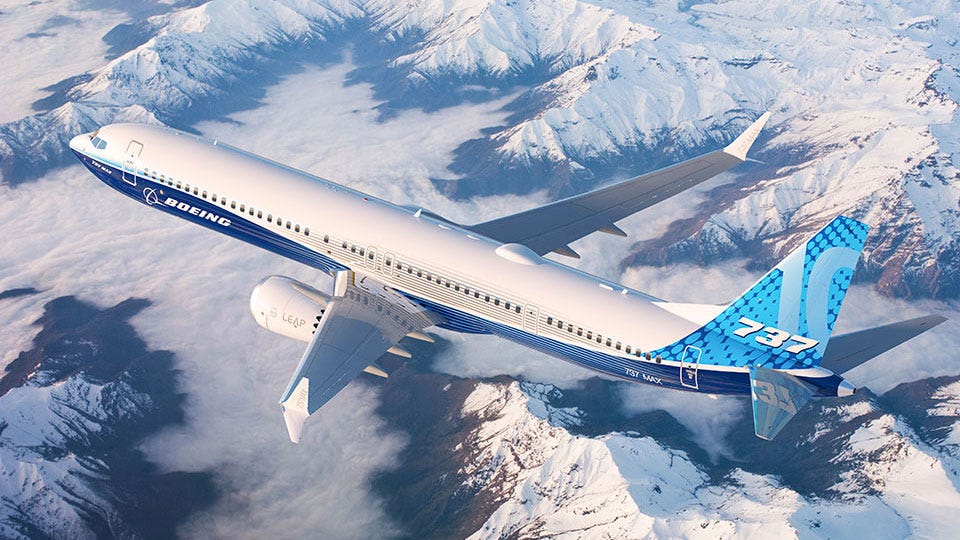
Certification “purgatory” for the 777X, MAX 7, and MAX 10.
It is the perfect storm for airlines that rushed to modernize. Now, those growth plans are effectively grounded.
Scrambling for “Plan B”
United Airlines serves as a primary case study in this frustration. United planned to swap out its aging Boeing 757s on flagship Newark-LAX/SFO routes for the 737 MAX 10. When Boeing failed to secure FAA certification in time, United pivoted in 2019, ordering A321neos for delivery starting in 2024. Now, as we sit in April 2026, those aircraft are only just expected to enter service by late summer.
Similarly, United’s 2023 order for 100 Boeing 787s was intended to retire the inefficient 767 fleet. Today, those 27-year-old 767s are still crossing the Atlantic because the Dreamliner deliveries remain delayed.
The $11 Billion Dollar Bill
Jet fuel now accounts for 25-30% of an aircraft’s operating cost. Using the April 2026 price of approximately $4.26 per gallon,1 the cost differential between the “Ghost Fleet” (ordered) and the “Vintage Fleet” (operating) is stark.
Case Study: The Newark-Los Angeles Run (2,967 miles)
A round trip on this route is currently costing airlines a fortune in missed efficiency:
The Fuel Burn Tax: 757-200 vs. A321neo
Westbound Burn: 22,500 lbs vs. 16,000 lbs (+6,500 lbs)
Eastbound Burn: 21,000 lbs vs. 15,000 lbs (+6,000 lbs)
Total Difference: 12,500 lbs
Added Fuel Cost per roundtrip, 757-200 over A321neo: $7,949
On the transatlantic run, the numbers shift from problematic to catastrophic. The roundtrip fuel burn on a “vintage” 767 is roughly 120,000 pounds, compared to 90,000 pounds for a modern 787-9. At today’s prices, that is a delta of approximately 4,478 gallons, resulting in a loss of $19,076 per roundtrip—in fuel alone. Over a standard 30-day rotation, a single delayed Dreamliner is costing a carrier over $570,000 a month in wasted kerosene.
The Hidden MRO Crisis
It isn’t just the fuel. A 27-year-old 757 racks up $1,800–$2,200 per block hour in MRO (Maintenance, Repair, and Overhaul) costs. Corrosion, C-checks running $1–2 million, and engine overhauls costing $300–400 per flight hour are bleeding carriers that had planned to retire these airframes two years ago.
In contrast, Delta reports that the A320neo slashes airframe and powerplant maintenance costs by 25% or more. When you combine fuel and MRO, an airline is losing approximately $85,000 in savings for every 787-9 rotation that is replaced by a 767. IATA estimates that $4.2 billion of the industry’s 2025 losses came purely from this excess fuel burn.
The Opportunity Cost: Routes Sacrificed to the Backlog
While the operational costs are measured in millions, the opportunity costs are measured in broken ambitions. Carriers are being forced to amputate parts of their network to keep the rest of the body alive.
Aegean Airlines had ordered A321XLRs to launch Athens-to-India service. They have since cancelled the order and shelved the route entirely.
American Airlines planned to use the XLR for “long-thin” routes like Miami-Madrid and Philadelphia-Prague. These are delayed, and the carrier cancelled DFW-FRA, MIA-CDG and JFK-MAD European routes last summer due to 787 delivery gaps.2
Riyadh Air finally launched in late 2025 — almost a year behind its original Q1 target — a costly reminder that Boeing’s delivery failures don’t just inconvenience legacy carriers; they can rewrite the entire business case of a startup airline. (Riyadh Air finally launched in late 2025—a year behind target and forced to use leased Oman Air 787s while its own fleet sat in the backlog).
Smaller carriers AirBaltic & Breeze had to scramble to cancel thousands of flights after Airbus failed to deliver A220s due to the Pratt & Whitney engine crisis.
Southwest Airlines was forced to exit four airports and CEO Bob Jordan was blunt: they couldn’t justify the overhead without the scale of the missing MAX 7s and 8s. Ryanair slashed its 2025 summer schedule by 7% because 57 expected aircraft were cut to just 40.
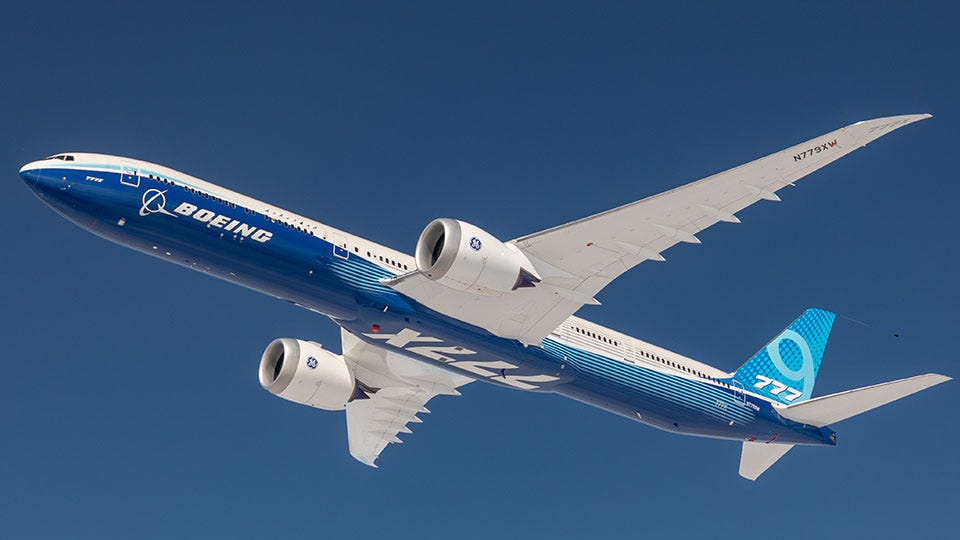
And Lufthansa, launch airline for the 777-9, is trapped flying “vintage” A340-600s and 747-400s to maintain capacity. The new 777s on which Lufthansa, Air France/KLM, British Airways and Emirates based their future longhaul routes have now been delayed by more than seven years.
Seven years.
A Failure Built into the System
The breakdown at Boeing and Airbus represents a fundamental failure of the modern aerospace industrial complex.
Boeing’s struggle is a shift from “efficiency at all costs” to a desperate search for “safety and stability,” a move that has left clients like Southwest and Ryanair planning their networks around “ghost” aircraft.
Airbus, meanwhile, is a victim of its own “just-in-time” supply chain. Pratt & Whitney’s Geared Turbofan (GTF) engines have been plagued by a “powder metal contamination” defect. Microscopic contaminants in the metal used for high-pressure turbine disks have been found to cause cracks. This forced an emergency global recall of thousands of engines for inspections that can take up to 300 days per engine.
PW’s delayed deliveries of their GTF engine have turned hundreds of brand-new A320neos into “gliders”—perfectly good airframes sitting on the tarmac in Toulouse and Hamburg with empty engine pylons. The strategic failure here was a lack of resilience; manufacturers optimized for a world where supply chains never broke.
The Economic Bleed: The $11 Billion Bill
According to IATA, delivery delays added $11 billion in unexpected costs to the industry in 2025. This isn’t just lost profit; it is actual cash out the door.3
The Leasing Premium
Because new planes aren’t arriving, the value of used aircraft has skyrocketed. Lease rates for narrowbodies have jumped 20-30% since 2019. Airlines that planned to return leased aircraft are now begging to extend those contracts, often at double the previous monthly rate. This “leasing premium” cost the industry an estimated $2.6 billion in 2025 alone.
A New Normal for Airline Strategy
I have spent twenty years talking to the people who run these airlines. I have sat in enough boardrooms to recognize the particular silence that follows a missed delivery date — the look of a CEO who ordered aircraft the way you order a car off a lot, and received instead a promise and a parking space. That silence is now the ambient noise of the entire industry.
The strategic failure of the manufacturers has forced a “New Normal” on airline executives. Strategy is no longer about finding the next lucrative city-pair; it is about managing a “Frankenstein” fleet of aging aircraft and mismatched engines.
We are seeing a massive shift in how airlines approach procurement. United Airlines, once a pure Boeing loyalist for its narrowbody growth, has strategically pivoted to Airbus leases to bridge the gap. Emirates and Qatar Airways are becoming increasingly vocal—and litigious—regarding delivery timelines.
The manufacturers built the backlog. The airlines built their strategies around it. And now the passengers — and the shareholders — are paying the price.
What comes next will define commercial aviation for a generation. Airlines that survive this period won’t be the ones who ordered the most aircraft. They’ll be the ones who managed the gap most intelligently — who found the lease extensions, protected the routes that matter, and resisted the temptation to overcommit to a delivery schedule that nobody in Toulouse or Renton can guarantee.
The holding pattern will end. It always does. But when it breaks, the carriers still flying will not be the ones who planned best. They’ll be the ones who adapted fastest. That is the only growth strategy that works right now — and it wasn’t in anyone’s 2026 forecast.
Airlines for America Daily Argus Jet Fuel Spot Price 28 April 2026
Ch-aviation
Reviving the Commercial Aircraft Supply Chain IATA October 13, 2025