
Guilty: French Appeals Court Finds Air France and Airbus Liable for 2009 AF447 Disaster
17years after the tragic Atlantic crash that claimed 228 lives, a Paris court today overturned a previous acquittal, delivering a monumental—yet financially minuscule—verdict for grieving families

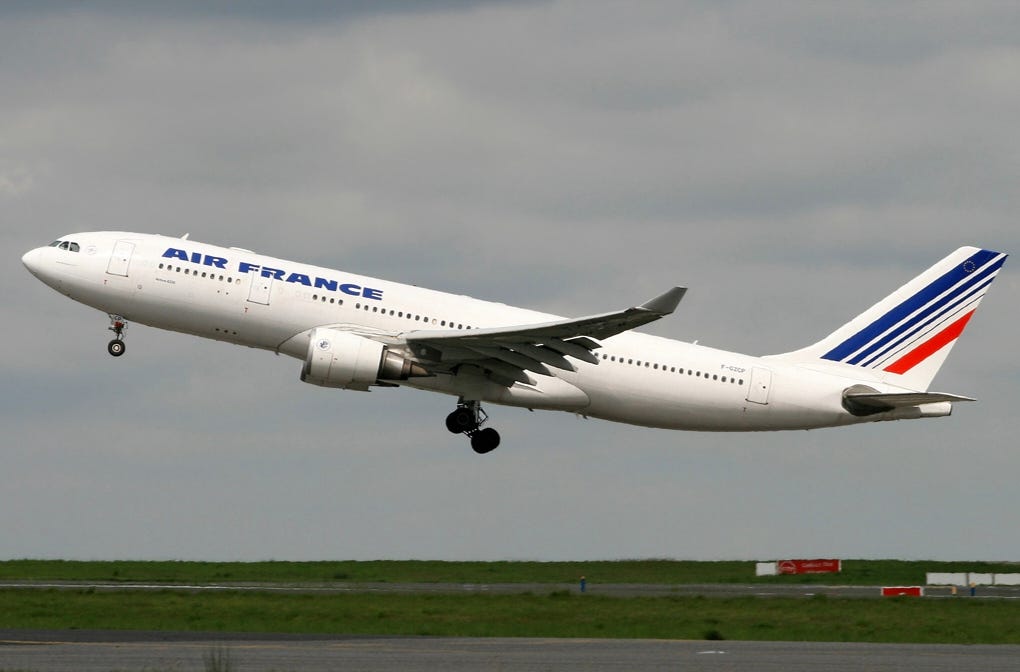
In a landmark ruling that completely reverses a previous lower court decision, a Paris appeals court has found both Air France and Airbus guilty of corporate manslaughter in connection with the 2009 crash of Air France Flight 447 crash.
The tragedy remains the deadliest aviation disaster in French history. All 228 passengers and crew aboard the flight were killed when the aircraft plunged into the Atlantic Ocean during an overnight flight from Rio de Janeiro to Paris.
A Symbolic Fine, But a Monumental Verdict
The court imposed the maximum statutory penalty permitted under French law at the time of the accident: fines of €225,000 (approximately $245,000 USD) for each company.
For corporations the size of Airbus and Air France, the financial penalties are negligible; critics have already dismissed the fines as largely symbolic.
But for many of the victims’ families, the monetary amount was never the central issue.
For nearly 17 years, families fought for a criminal conviction that would formally acknowledge corporate responsibility for the disaster. Wednesday’s ruling finally delivered that recognition, marking an emotional milestone in one of aviation’s longest-running legal battles.
The Crash That Shocked Global Aviation
Flight AF447 departed Rio de Janeiro on June 1, 2009, carrying passengers and crew from 33 countries. During a nighttime crossing of the Atlantic, the Airbus A330 disappeared from radar while flying through severe storm activity.
The mystery surrounding the crash captivated the aviation world for years.
It took a massive two-year underwater search operation before investigators finally located the wreckage and recovered the aircraft’s flight recorders from the ocean floor.
The official investigation, completed in 2012, concluded that the crash resulted from a combination of technical malfunction and pilot error.
The aircraft’s pitot tubes — critical sensors used to measure airspeed — became obstructed by ice crystals at high altitude, causing inconsistent speed readings and confusing cockpit indications. In the chaos that followed, the flight crew mishandled the situation and inadvertently placed the aircraft into an aerodynamic stall from which it never recovered.
Prosecutors Expanded the Blame Beyond the Cockpit
While the pilots’ actions were central to the accident sequence, prosecutors argued that the responsibility extended far beyond the flight deck.
The legal case focused heavily on what prosecutors described as systemic failures inside both companies. Among the key allegations:
Inadequate pilot training for high-altitude stall recovery scenarios.
Failure to sufficiently address earlier incidents involving iced-over pitot tubes.
Corporate decisions that allegedly underestimated known operational risks.
According to prosecutors, those failures established a direct chain between corporate negligence and the eventual loss of the aircraft.
A Dramatic Legal Reversal
The ruling represents a dramatic turnaround from the earlier criminal trial.
In 2023, a lower French court acquitted both Airbus and Air France of criminal charges, a decision that sparked outrage among victims’ families and advocacy groups. Throughout the proceedings, both companies consistently denied criminal negligence.
Under the French legal system, however, an appeal results in an entirely new trial rather than a limited review of procedural issues. Judges reconsider the evidence from the beginning.
To secure convictions for manslaughter, prosecutors were required to prove not merely generalized negligence, but a direct causal connection between corporate actions and the fatal crash itself.
The appeals court ultimately agreed with that argument.
The Legal Fight May Not Be Finished
Although Wednesday’s verdict represents a historic victory for victims’ families, the legal process may not yet be over.
If either Air France or Airbus appeals to France’s highest court, the focus of the case would likely shift away from the operational details of Flight AF447 itself and move into the more technical realm of French statutory and procedural law.
For now, however, the official legal record in France states that corporate negligence played a defining role in one of the most haunting disasters in modern aviation history.
As the aviation industry continues to evolve its training standards, automation philosophy, and cockpit procedures, the legacy of Flight AF447 continues to shape global discussions about safety, accountability, and the relationship between pilots and increasingly complex aircraft systems.